The Story, Promise, and Future of the Churches of Christ
Quiz
Instead of seminaries, we have…
A.Sunday schools
B.Singing schools
C.Preaching schools
Our Wild Democracy · Chapter 6
Wherever Two or Three Are Gathered
Brush Run, Pennsylvania · 1811–1812
The Brush Run meeting house, reconstructed at Bethany · courtesy of Bethany College
May 4, 1811
Brush Run Church Formed
Side path · recap
The first Supper, again
His sermon
“I am that bread of life.”
John 6:48 · Alexander’s text that morning · in Richardson, Memoirs
The sermon’s close
“…in assembling there on that occasion, they furnished an emblem of the millennial state of the Church, nay, an emblem of the heavenly state, when men of different nations, and known by different names, should sit down together in the kingdom of God.”
Alexander Campbell’s communion sermon · in Richardson, Memoirs
May 4, 1811
“At this meeting, Thomas Campbell was appointed elder, and Alexander was licensed to preach the gospel. Four deacons were also chosen…”
Robert Richardson, Memoirs of Alexander Campbell (1868)
Christmas, 1811
“…whether or not it was his duty to be ordained to the ministry of the Word. With him, ordination implied a formal, public and irrevocable consecration of life to the preaching of the gospel…”
Robert Richardson, Memoirs of Alexander Campbell (1868)
December 25, 1811 · his own list
“Special instances of Divine power which I consider to bind me under obligations to be specially devoted to Him…
In resolving, when in imminent danger at sea, to serve God in this way, on two occasions of extraordinary deliverance…
In giving me a choice companion, congenial to my inclination of serving Him.
In giving me a call from the Church to preach the Gospel…
In my desire to suffer hardships and reproach in that good work.”
Alexander Campbell · in Richardson, Memoirs
January 1, 1812
The Ordination
January 1, 1812
“We do hereby certify that Alexander Campbell… was, according to the principles of this Church regularly chosen and ordained a minister thereof, upon the first day of January, one thousand eight hundred and twelve.”
Certificate of ordination, recorded in the Brooke County court, December 1812 · in Richardson, Memoirs
Who gave them that authority?
Side path · it shall not be so among you
A testimony to the people’s authority
Stone’s side, first
“We will, that our name of distinction, with its Reverend title, be forgotten, that there be but one Lord over God’s heritage, and his name one.”
Last Will and Testament of the Springfield Presbytery (1804)
Not Reverend
“In renouncing the title ‘Reverend’ as an improper designation for a preacher, it being applied in Scripture to the name of the Divine Being, Thomas Campbell continued for some time to annex occasionally to his name the initials V. D. M., representing the words Verbi Divini Minister, or ‘Minister of the Word of God’…”
Robert Richardson, Memoirs of Alexander Campbell (1868)
The apostles
“…those plain, honest, unassuming men… were never distinguished by the venerable titles of Rabbi or Reverend, but just simple Paul, John, Thomas, etc. These were but servants. They did not assume to legislate…”
Thomas Campbell, Declaration and Address (1809), the Appendix
All ye are brethren
“…a liberty from subjection to any authority but his own, in matters of religion. Call no man father, no man master on earth; for one is your master, even Christ, and all ye are brethren.”
Thomas Campbell, Declaration and Address (1809)
Alexander’s masthead
“Style no man on earth your Father; for he alone is your Father who is in Heaven; and all ye are brethren. Assume not the title of Rabbi; for ye have only one Teacher;—Neither assume the title of Leader; for ye have only one Leader—the MESSIAH.”
Alexander Campbell, Christian Baptist, the motto on every volume (1823–1830)
Luke 22:25–26
“The kings of the Gentiles exercise lordship over them; and they that exercise authority upon them are called benefactors.
But ye shall not be so…”
Luke 22:25–26, King James Version
Matthew 20:26
It shall not be so among you.
Side path · the people’s authority in Scripture
What they read
Matthew 18:17–20
“…tell it unto the church: but if he neglect to hear the church, let him be unto thee as an heathen man and a publican.
Verily I say unto you, Whatsoever ye shall bind on earth shall be bound in heaven…
For where two or three are gathered together in my name, there am I in the midst of them.”
Matthew 18:17–20, King James Version
Thomas, on Matthew 18
“‘What ye bind on earth shall be bound in heaven’ is the awful sanction of the Church’s judgment, in justly rejecting any person. Take away this, and it has no sanction at all.”
Thomas Campbell, Declaration and Address (1809), the Appendix
The choosing
“…brethren, look ye out among you seven men… whom we may appoint over this business.” Acts 6:3
“Separate me Barnabas and Saul… And when they had fasted and prayed, and laid their hands on them, they sent them away.” Acts 13:2–3
“And when they had ordained them elders in every church…” Acts 14:23
“…who was also chosen of the churches…” 2 Corinthians 8:19
King James Version
Alexander’s notes
“Our Lord ordained twelve, Mark iii. 14, and that was by choosing them… The ordination of Paul and Barnabas, Acts xiii. 1-4; xiv. 23, ‘with lifting up of the hands had chosen them;’ 2 Cor. viii. 19…”
Alexander Campbell, 1811 · in Richardson, Memoirs
Any congregation
“…I would contend that any congregation has a right to call, appoint, or ordain any person to any office laid down in the volume… without calling to their aid the assistance of any foreign deacon, bishop or officer.”
Alexander Campbell, Christian Baptist, 1826
Walter Scott, asked who lays on hands
“If, my dear Bro., the church has not the right, who has? and if the hands laid on are to be holy, I would advise to take the brethren’s.”
Walter Scott, The Evangelist, 1832
Whose ordinations are valid? Where does authority in the church come from?
Side path · images for Whose orders?
Images to choose from
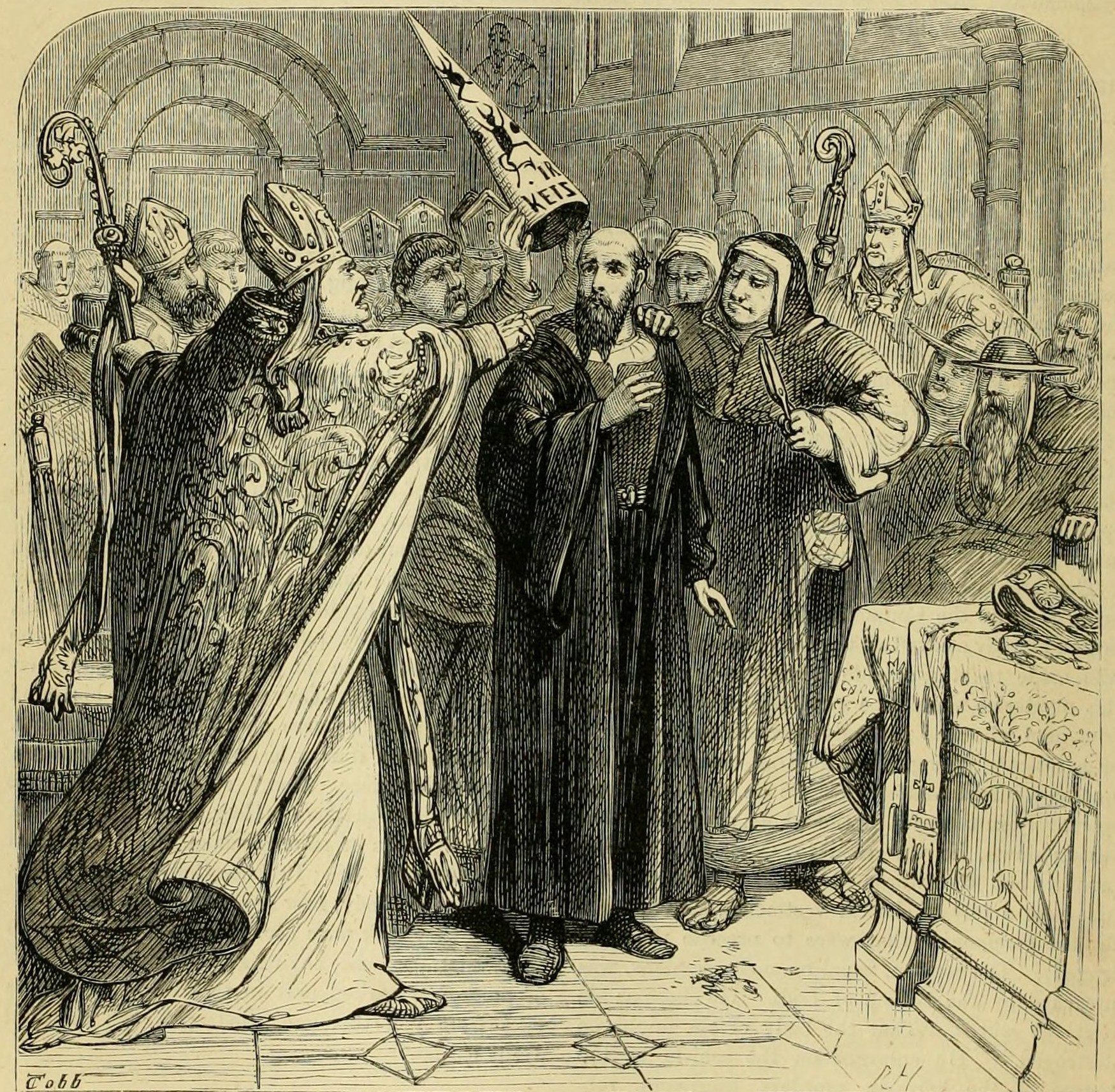
“Trial of Huss: Degrading the Martyr” · Cobb · J. A. Wylie, History of Protestantism, vol. 1 (c. 1875)
On July 6, 1415, the Council of Constance condemned Jan Hus, and seven bishops ritually degraded him from the priesthood: they took back his vestments and chalice, cut his tonsure and crowned him with a paper cap marked “Heresiarch.” Stripped of his orders, he was handed to the secular power and burned that day.
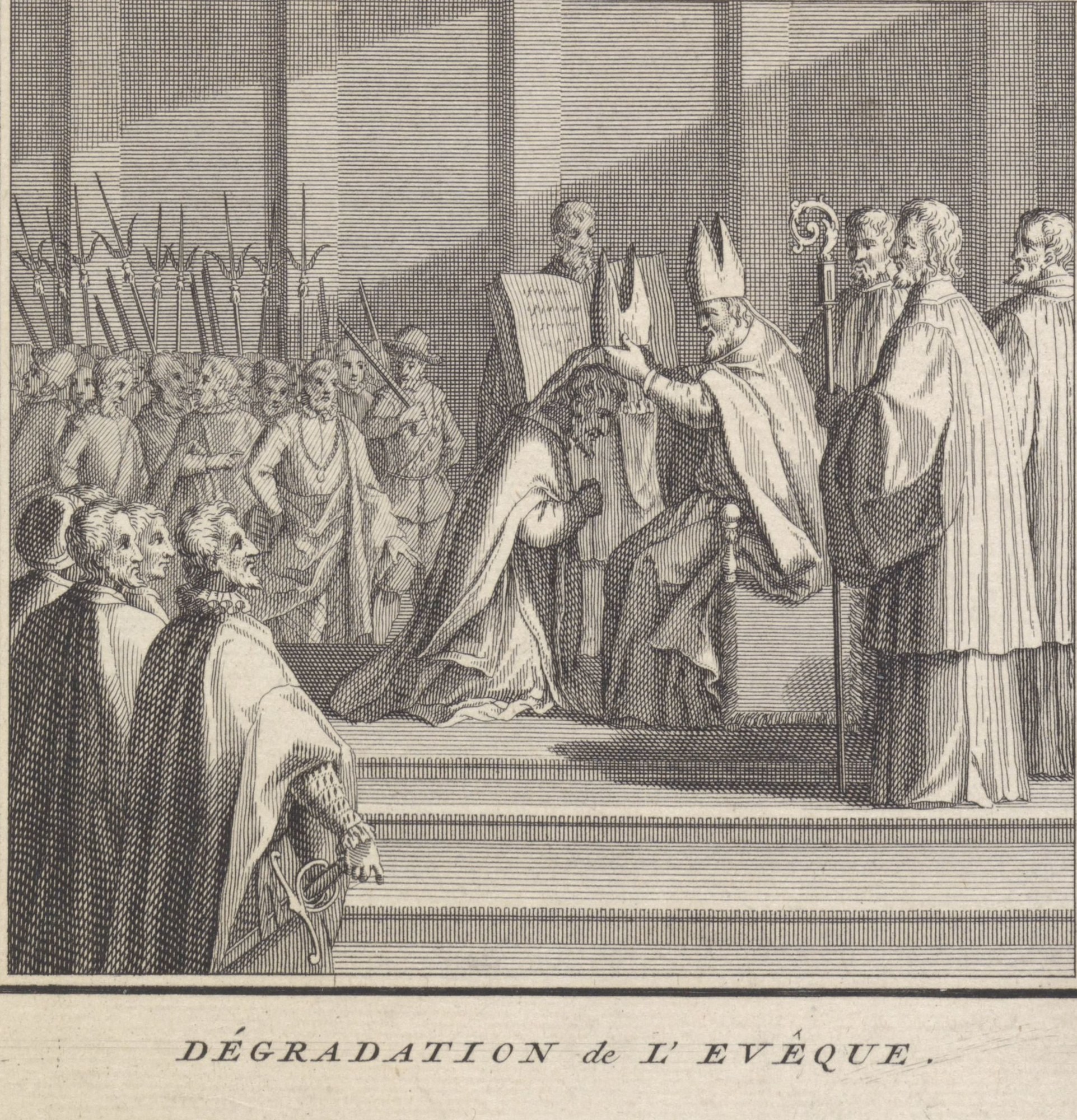
“Dégradation de l’Évêque” · workshop of Bernard Picart, Cérémonies et coutumes religieuses (1723) · Rijksmuseum
The Roman Pontifical set out a formal rite of “degradation,” by which a church court unmade a cleric’s orders, taking back each sign of office in the reverse order of ordination. Picart’s encyclopedia of religious ceremonies shows a bishop having his mitre taken from him.
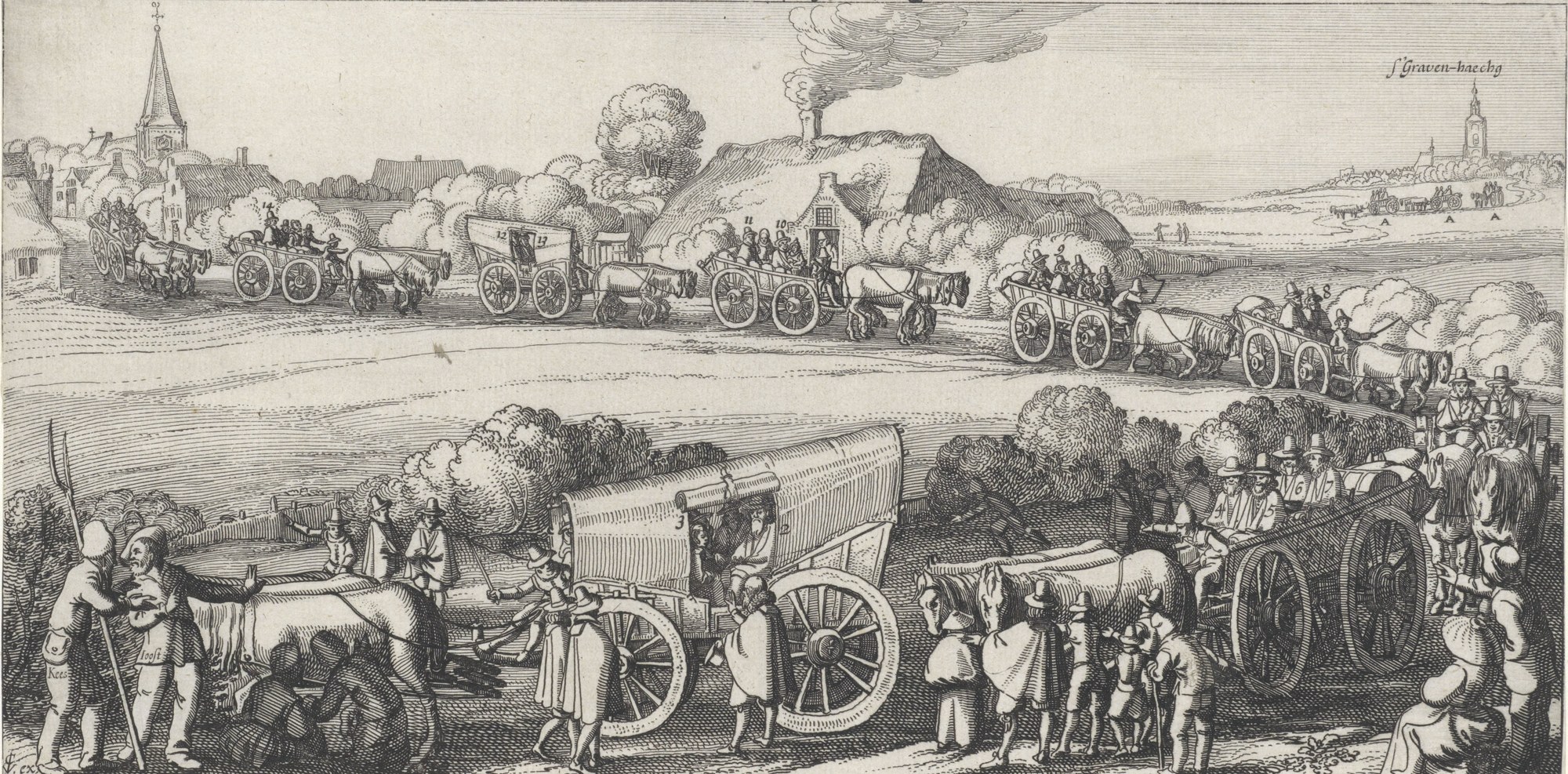
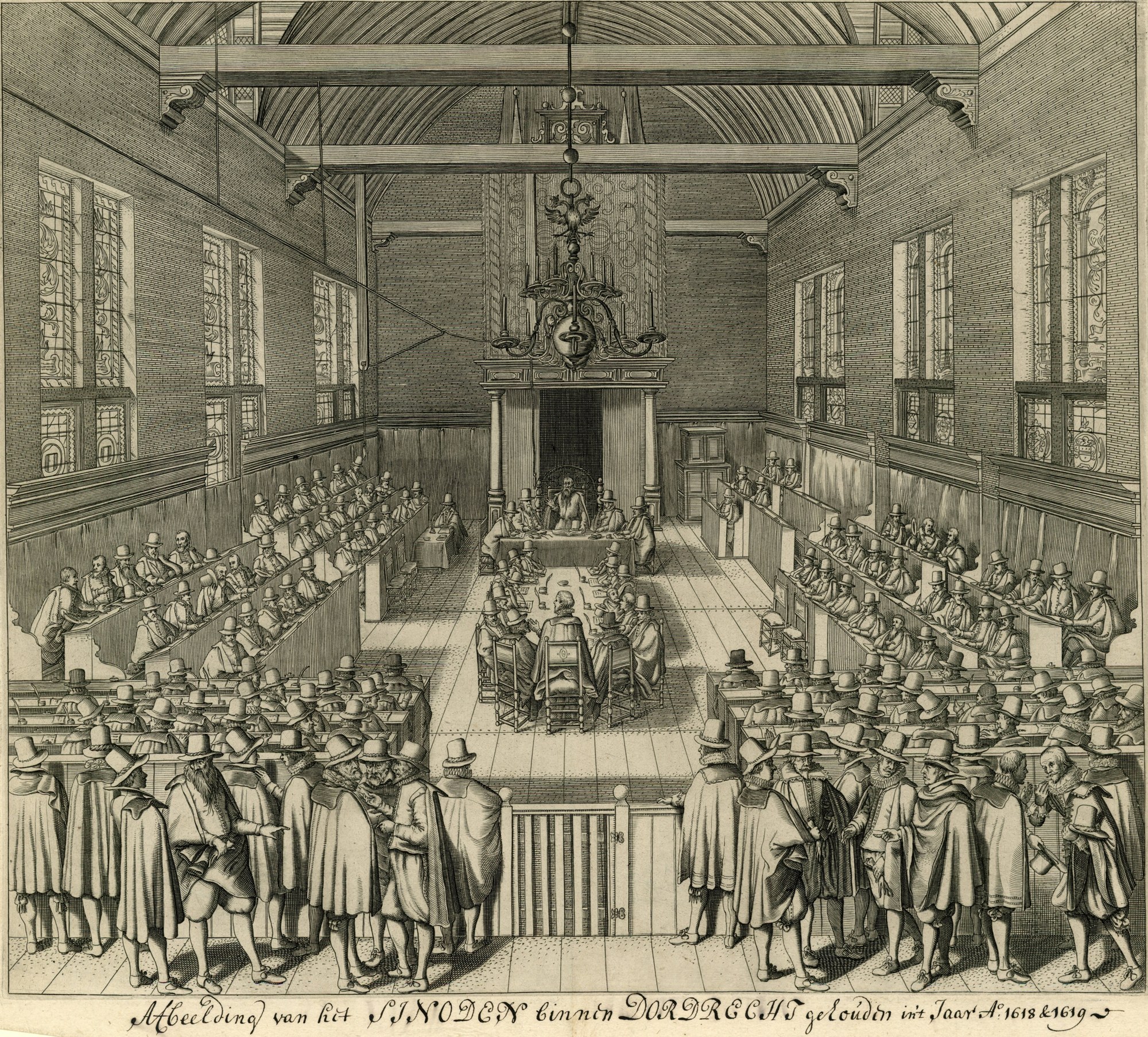
The Synod of Dort (1618–19) condemned the Remonstrants, and some two hundred of their ministers were deposed. Those who would not stop preaching were banished, carted out of The Hague to the border in July 1619.
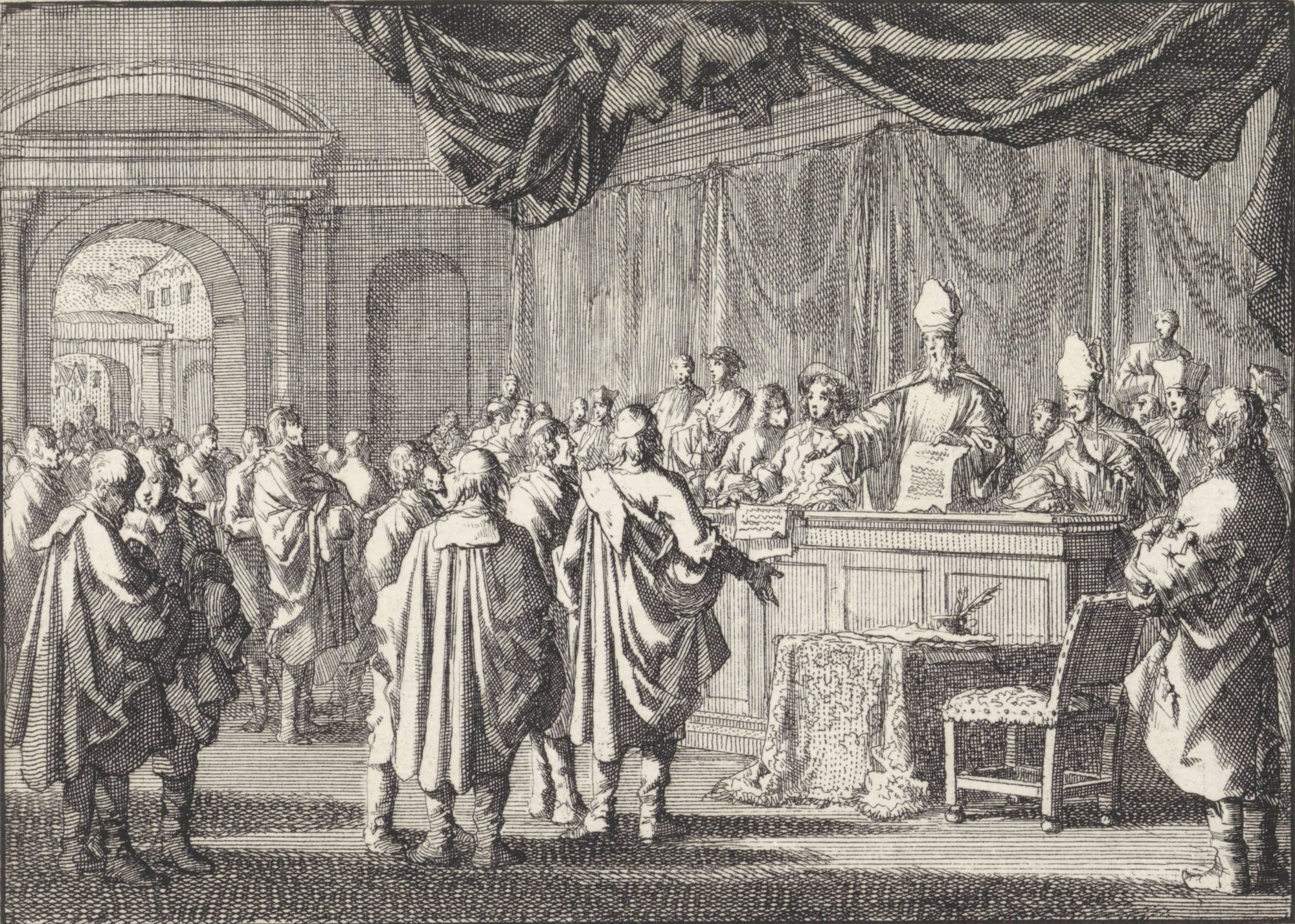
Reformed pastors in Hungary before a court of bishops · Jan Luyken (1698) · Rijksmuseum
In 1673–74 Archbishop Szelepcsényi of Esztergom summoned hundreds of Hungarian Protestant pastors and teachers before special tribunals at Pressburg. Most were forced to give up their ministry or go into exile, and dozens who refused were sold to the galleys at Naples, freed in 1676 by Admiral de Ruyter.
“Ejecting a Hungarian Protestant Pastor in the Winter Time” · Wylie, History of Protestantism, vol. 3 (c. 1878)
Once the tribunals had condemned them, Hungary’s Protestant pastors were turned out of their churches and parsonages, often with nowhere to go. Wylie’s illustrator imagines one family put out in winter.
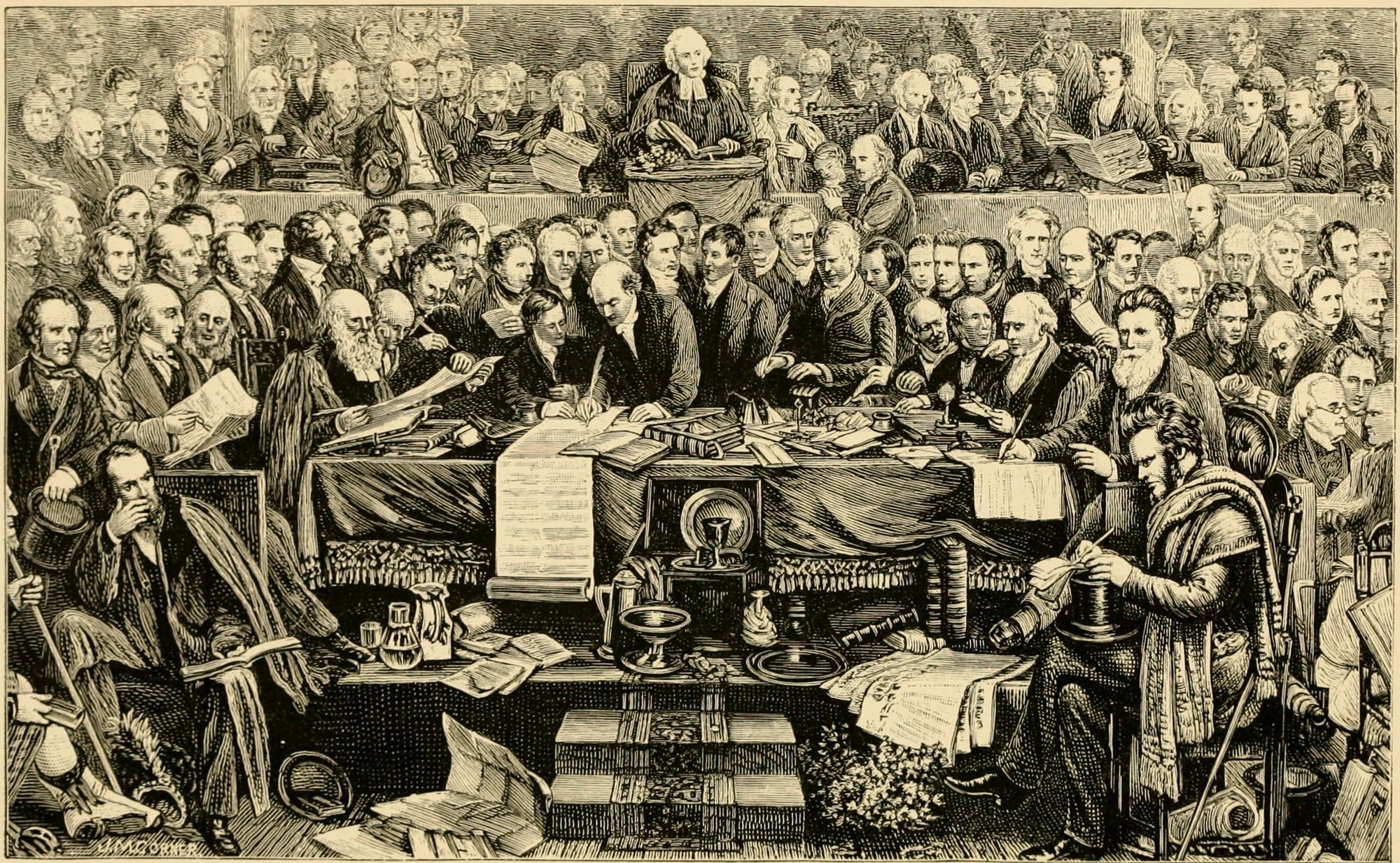
“The First Free Church Assembly: Signing the Deed of Demission” · J. M. Corner after D. O. Hill · Thomas Brown, Annals of the Disruption (1893)
On May 23, 1843, at Tanfield Hall in Edinburgh, about 474 ministers of the Church of Scotland signed away their churches, stipends and manses rather than accept the civil courts’ control over who could be placed as their ministers. Hill spent twenty-three years on the painting.
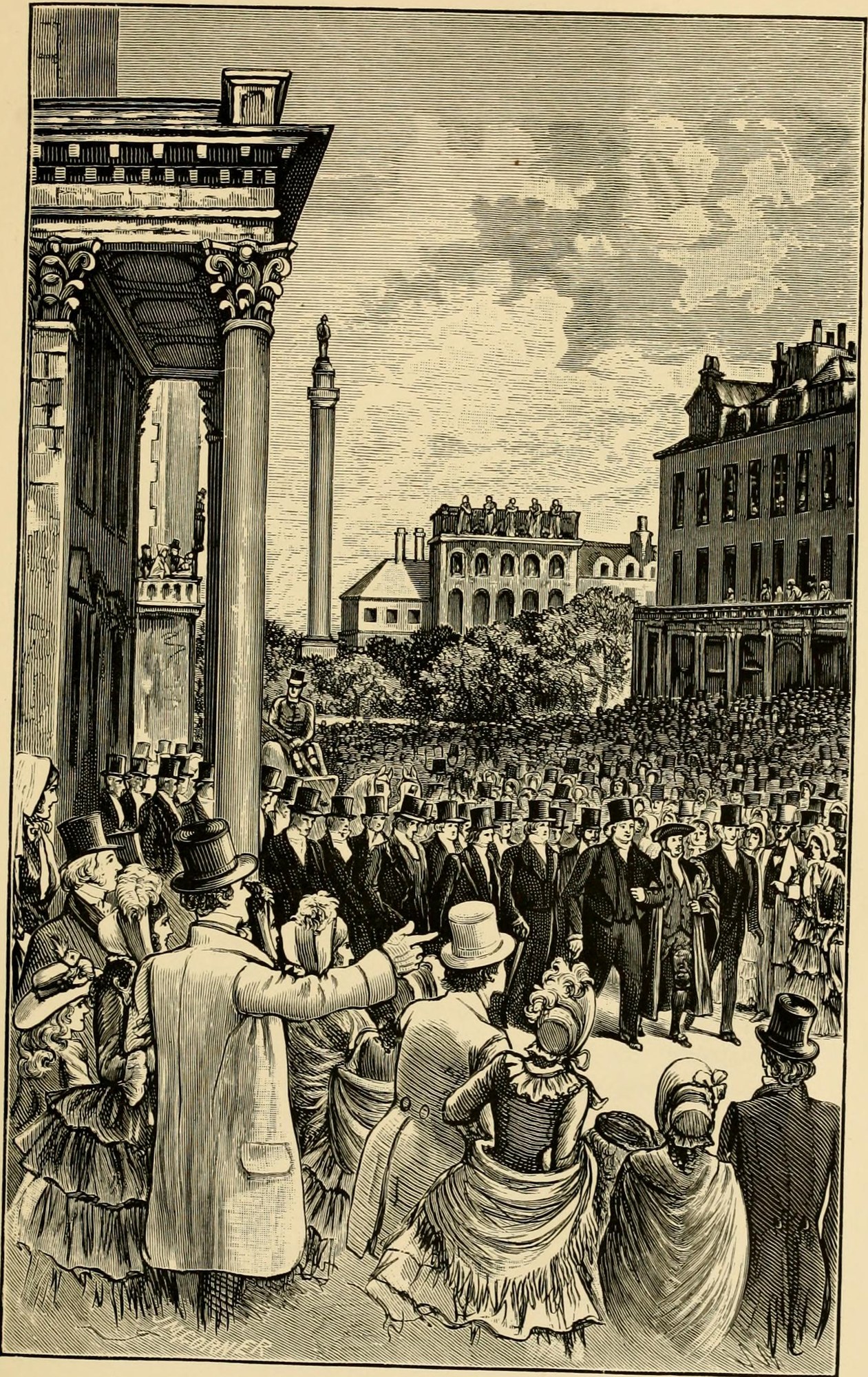
“The Procession on the 18th of May” · J. M. Corner · Brown, Annals of the Disruption (1893)
On May 18, 1843, the retiring Moderator read a Protest to the General Assembly, laid it on the table and walked out, followed by more than two hundred ministers and elders. They walked through crowded Edinburgh streets to Tanfield Hall and constituted the Free Church of Scotland.
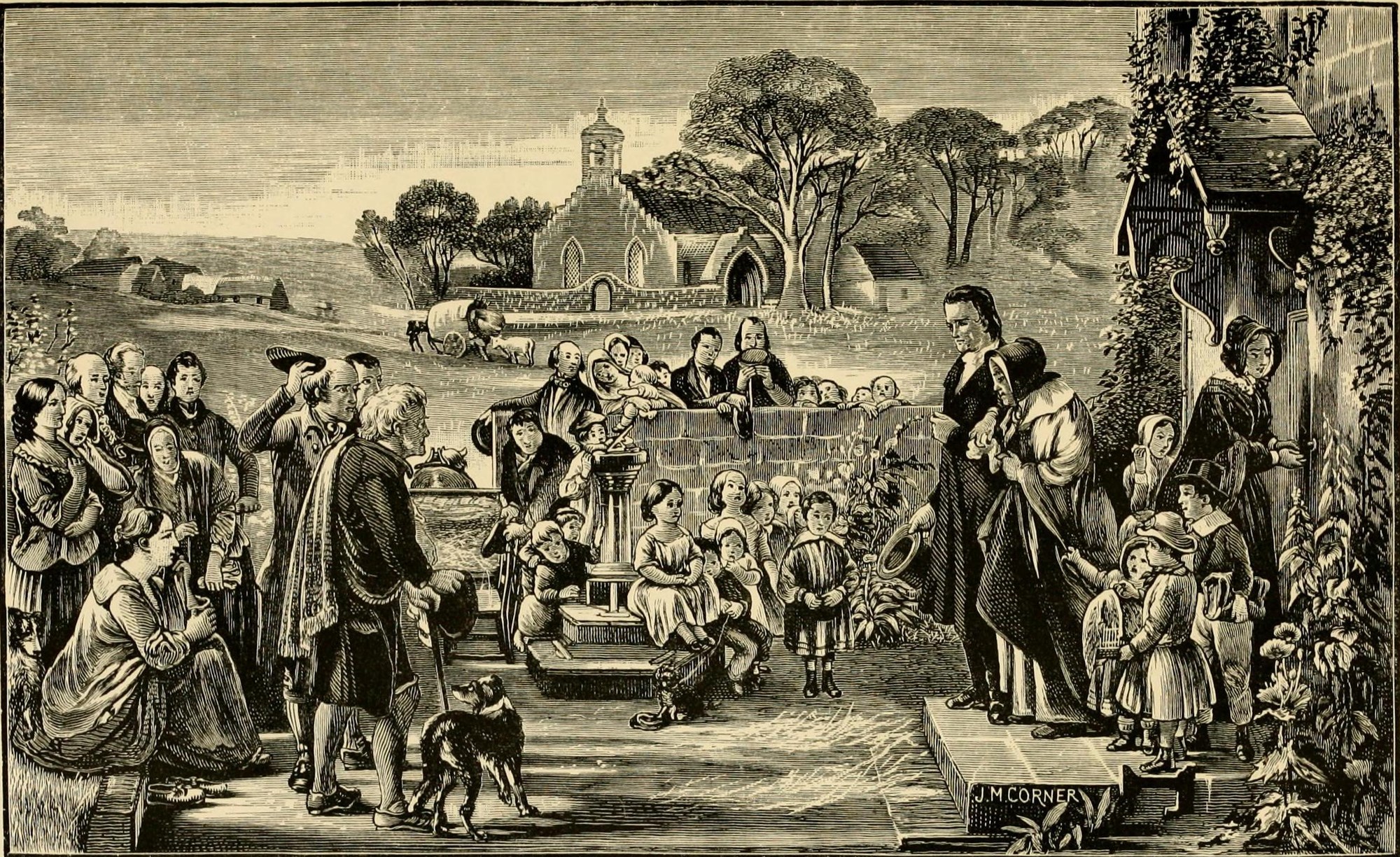
“Leaving the Manse” · J. M. Corner · Brown, Annals of the Disruption (1893)
Each minister who signed the Deed of Demission gave up his manse as well as his pulpit, and that summer hundreds of families left their homes. Many congregations worshipped in tents, barns or the open air until new churches could be built.
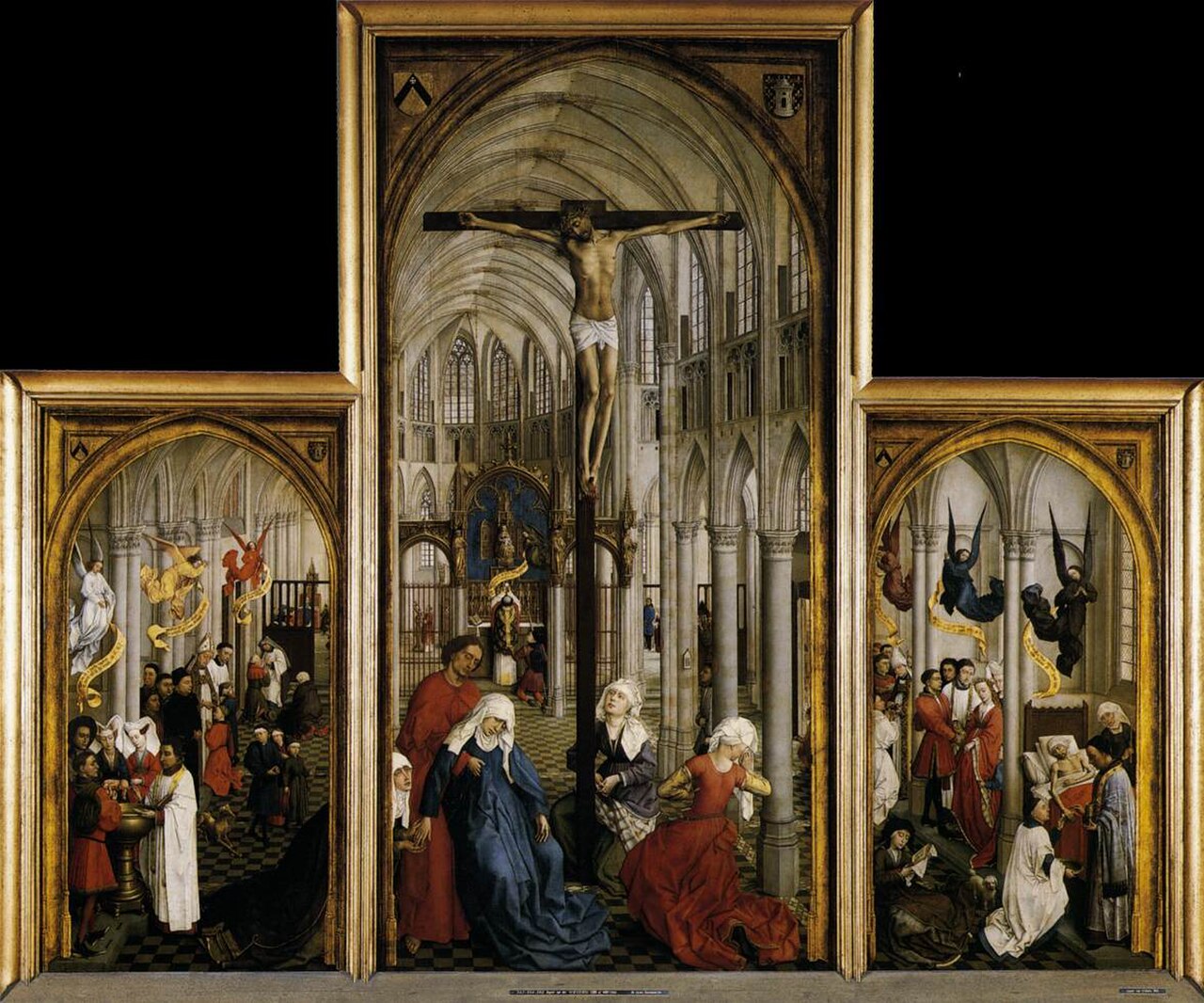
Rogier van der Weyden, Seven Sacraments Altarpiece, c. 1445–50 · Royal Museum of Fine Arts, Antwerp
Painted in Flanders around 1445, the altarpiece shows all seven sacraments of the medieval church taking place inside one cathedral. In the right wing a bishop lays hands on a kneeling man and ordains him priest: the whole system of orders in one scene.
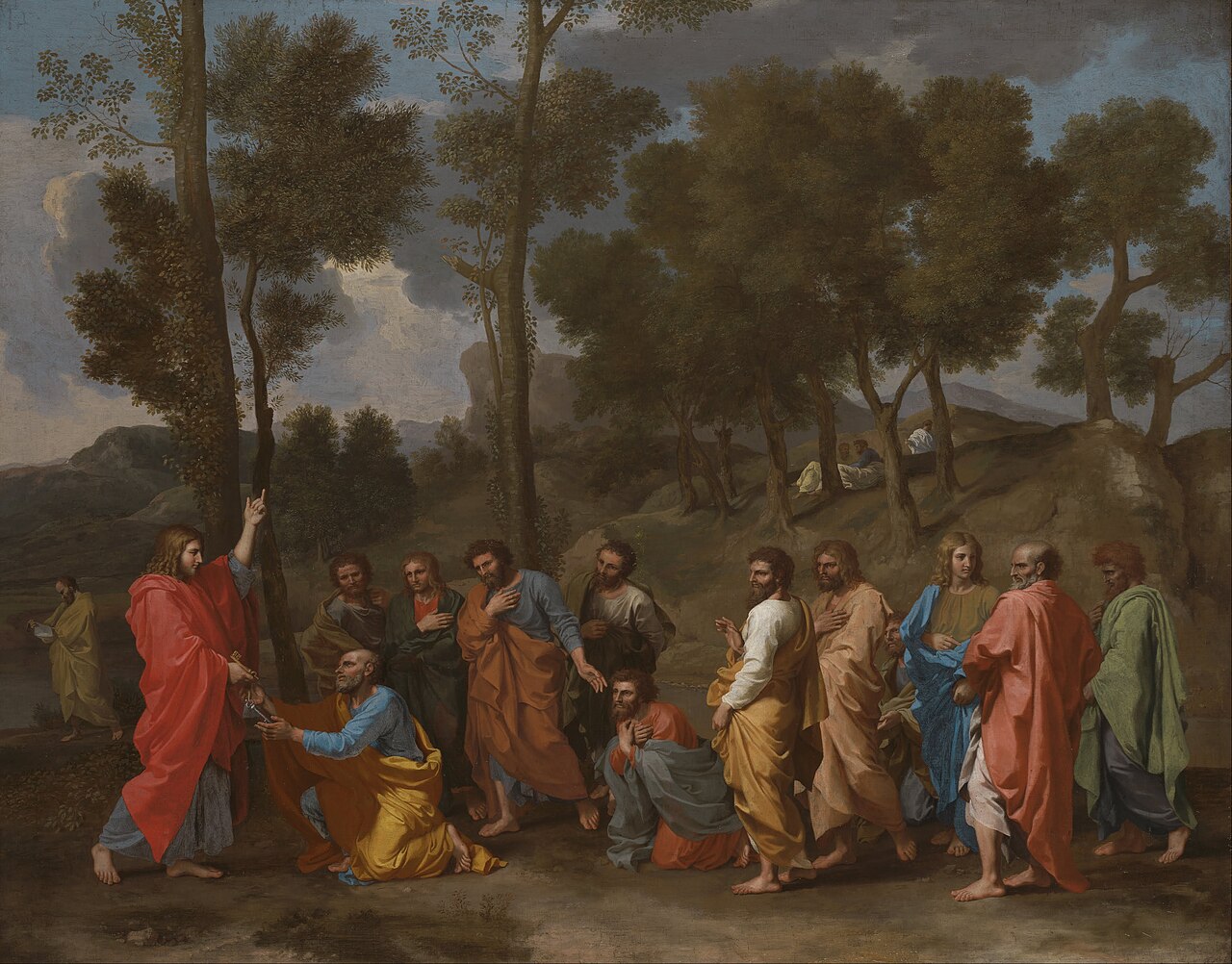
Nicolas Poussin, Ordination (Christ giving the keys to Peter), 1630s
Poussin painted the seven sacraments in the 1630s, and for Ordination he chose Christ handing the keys to Peter (Matthew 16:19). It is the scene Rome reads as the founding of the papacy and of the bishops’ succession.
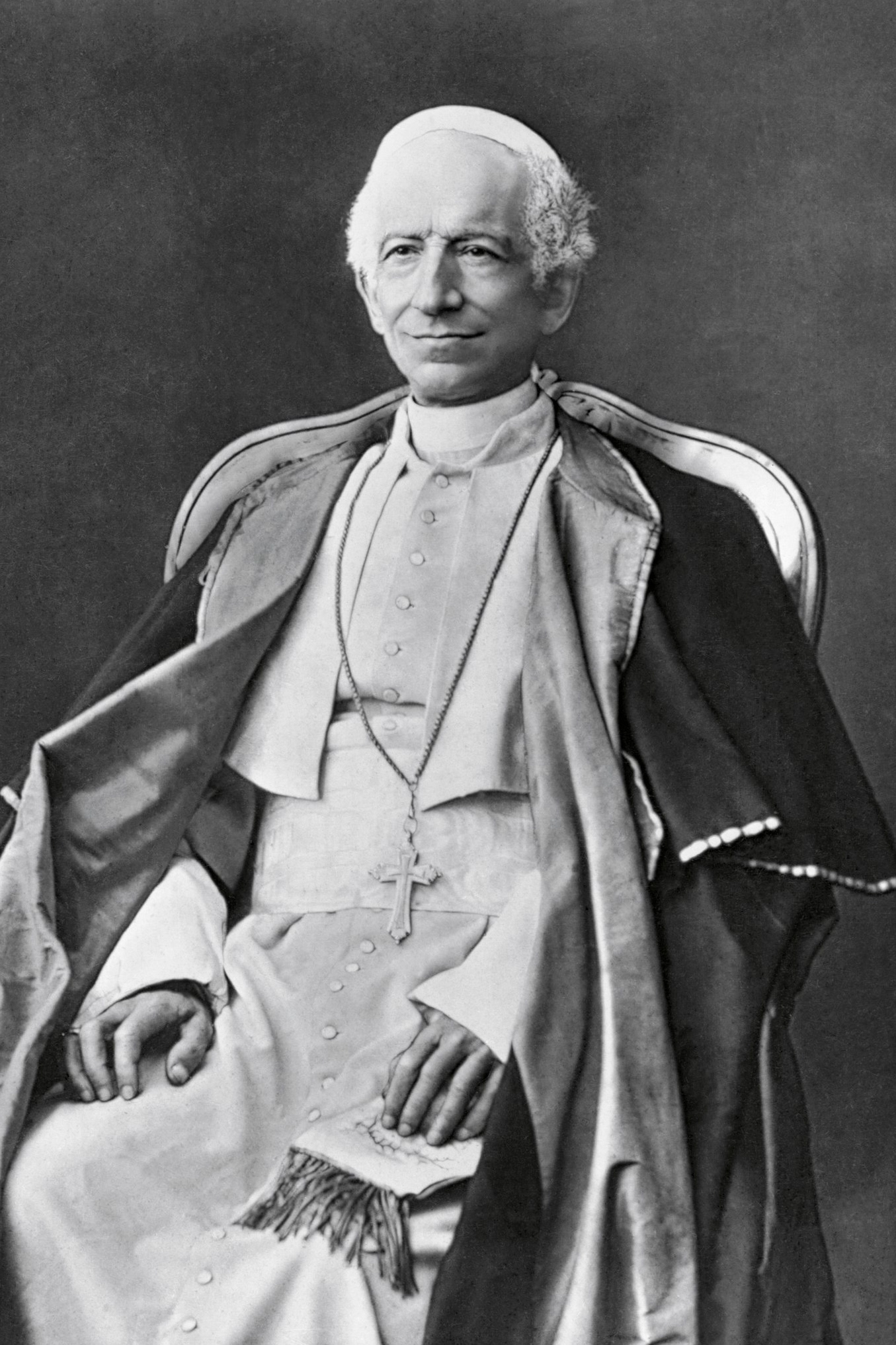
Pope Leo XIII (r. 1878–1903), photograph
Leo XIII was pope from 1878 to 1903. In 1896 his bull Apostolicae Curae declared Anglican ordinations “absolutely null and utterly void,” after Anglican and Catholic scholars had pressed Rome to reconsider the question.
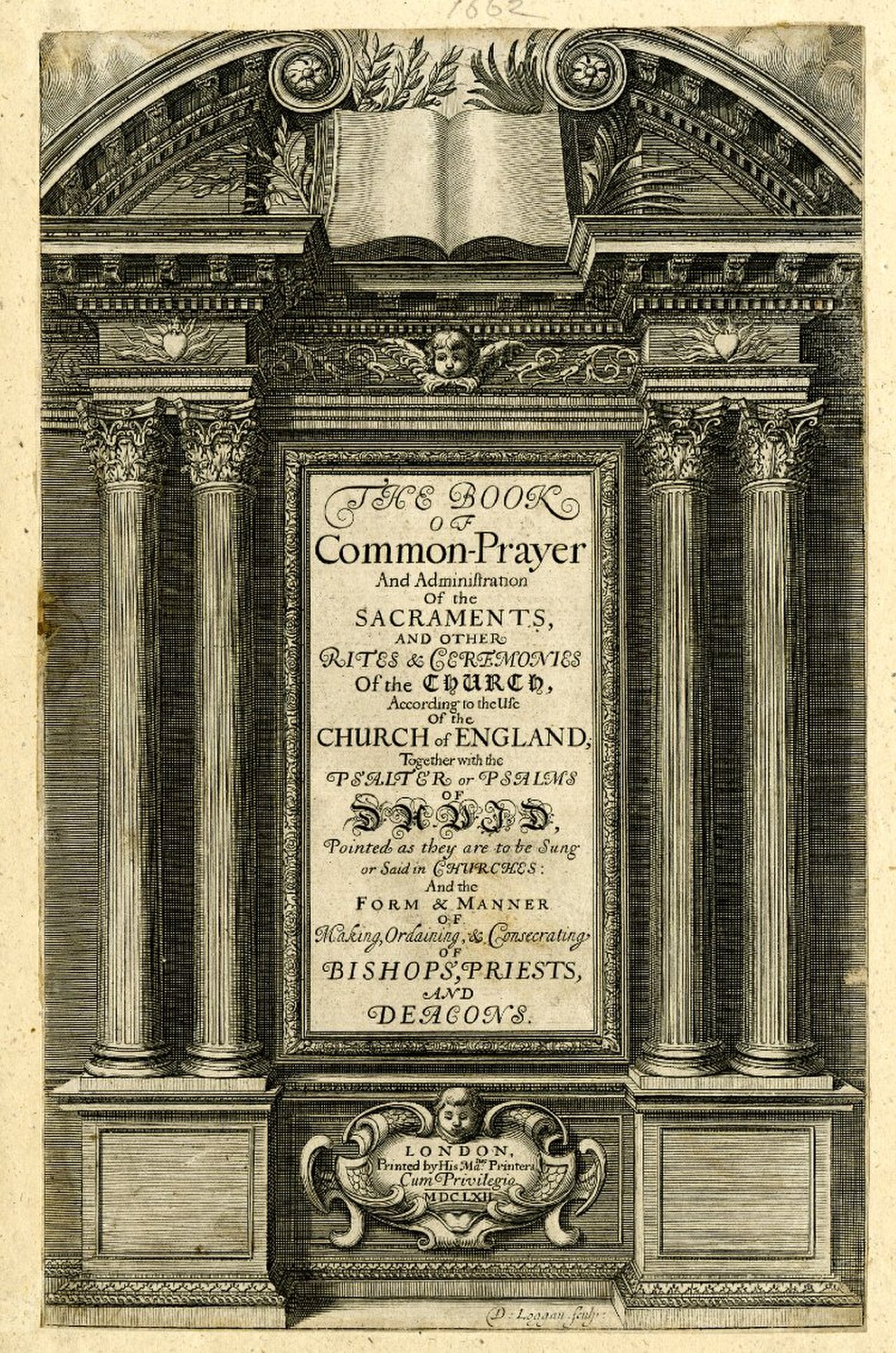
The Book of Common Prayer (1662), title page
The 1662 Book of Common Prayer, imposed by the Act of Uniformity, bound into one volume the services and “the Form and Manner of Making, Ordaining, and Consecrating of Bishops, Priests, and Deacons.” Its preface allowed no ministry in the Church of England without a bishop’s ordination.
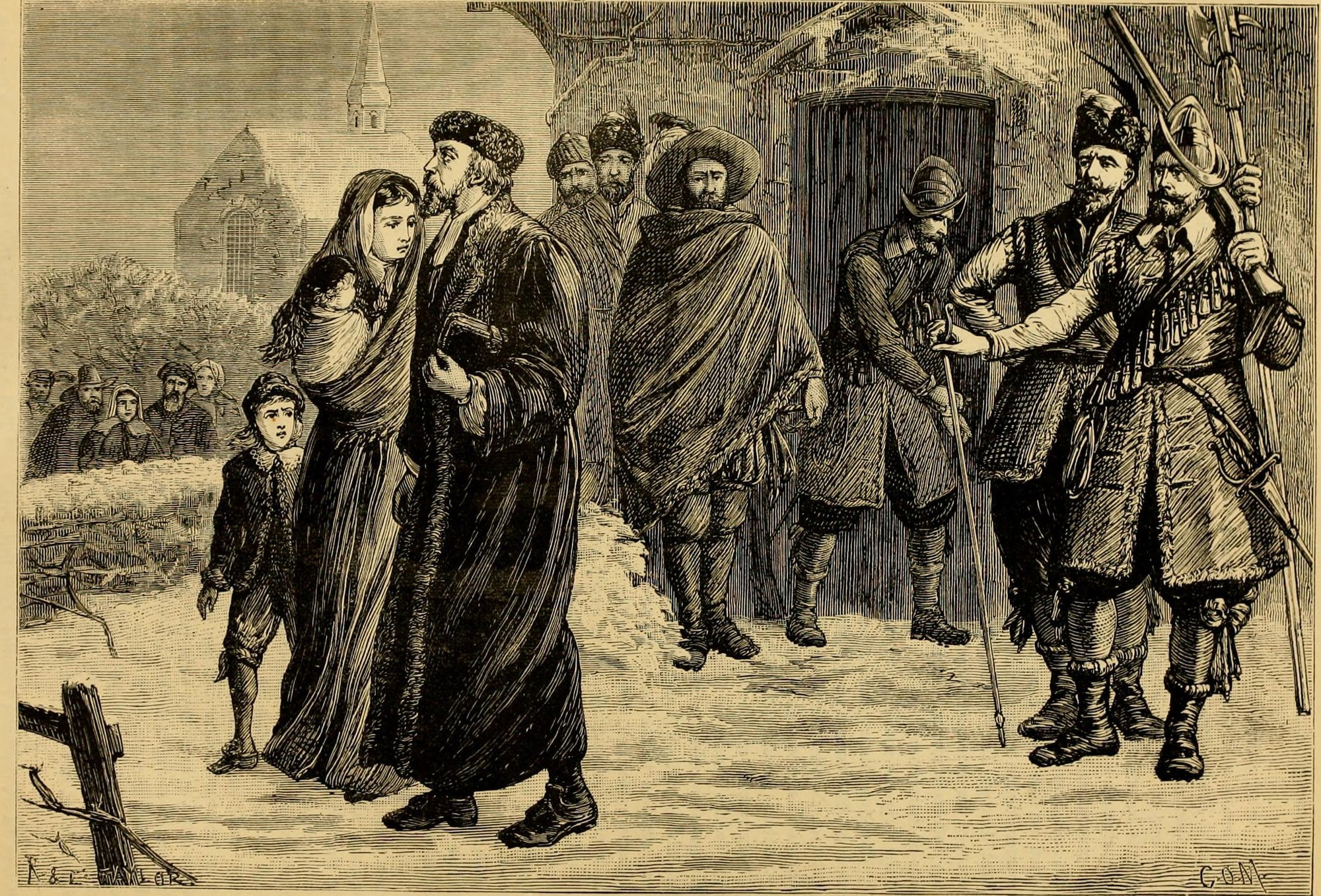
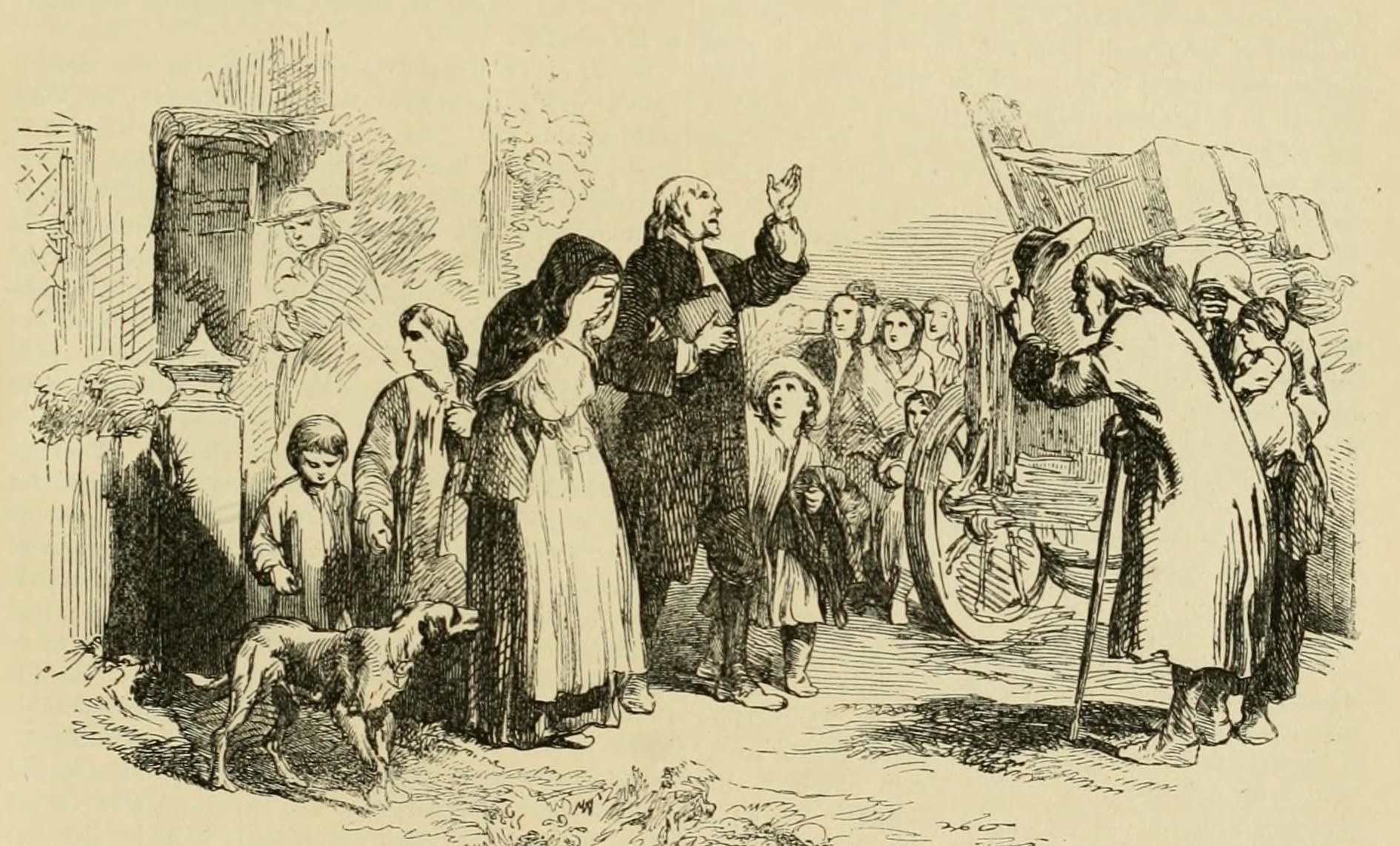
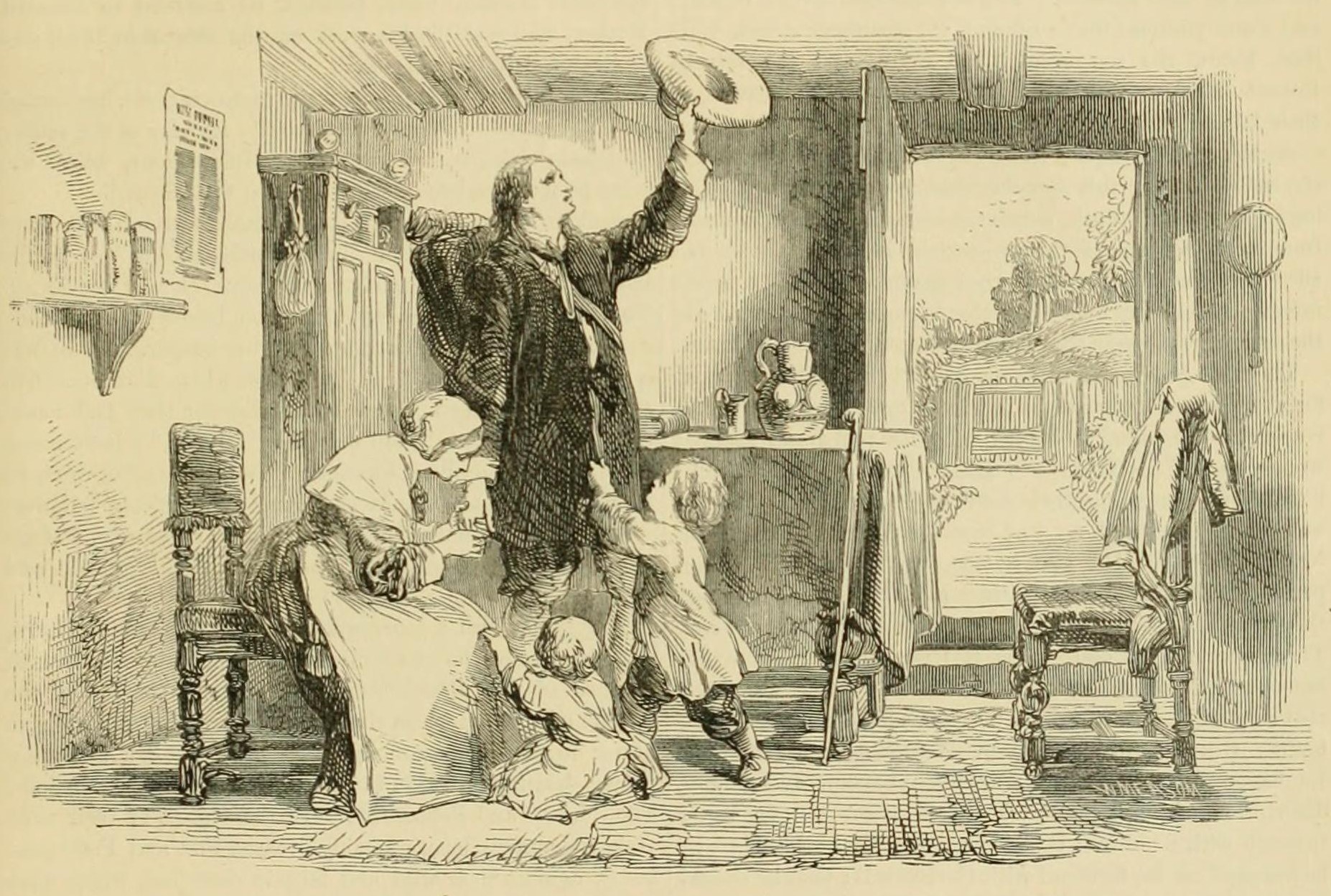
“Ejection of Nonconformists on St. Bartholomew’s Day” · Cassell’s Illustrated History of England, vol. 3 (1865), p. 427
On St Bartholomew’s Day, August 24, 1662, about two thousand ministers who would not accept episcopal ordination and the new Prayer Book lost their livings. A Victorian engraver imagines one of them leaving his parsonage with his family, the cart already loaded.
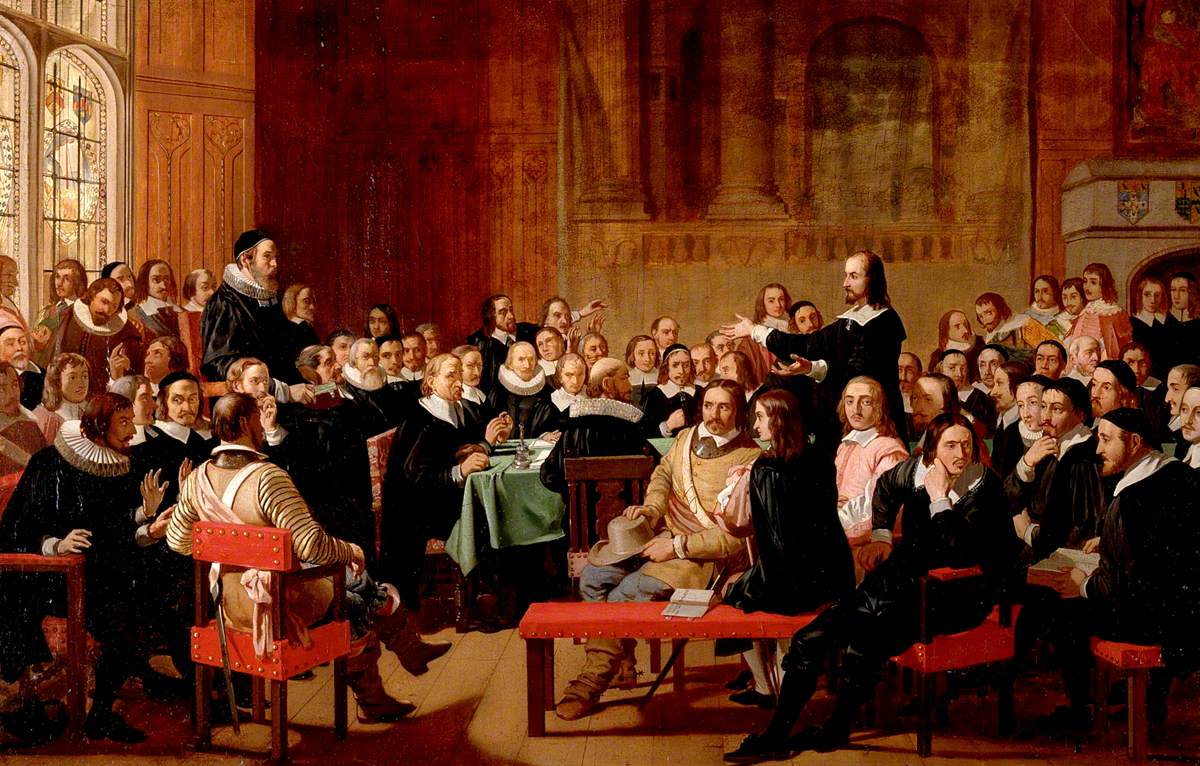
John Rogers Herbert, Assertion of Liberty of Conscience by the Independents of the Westminster Assembly of Divines, 1644 · Parliamentary Art Collection
In 1644 the Westminster Assembly, called by Parliament to reform the Church of England on Presbyterian lines, debated church government. Herbert paints the handful of Independents, who held that each congregation governs itself, standing against the Presbyterian majority.
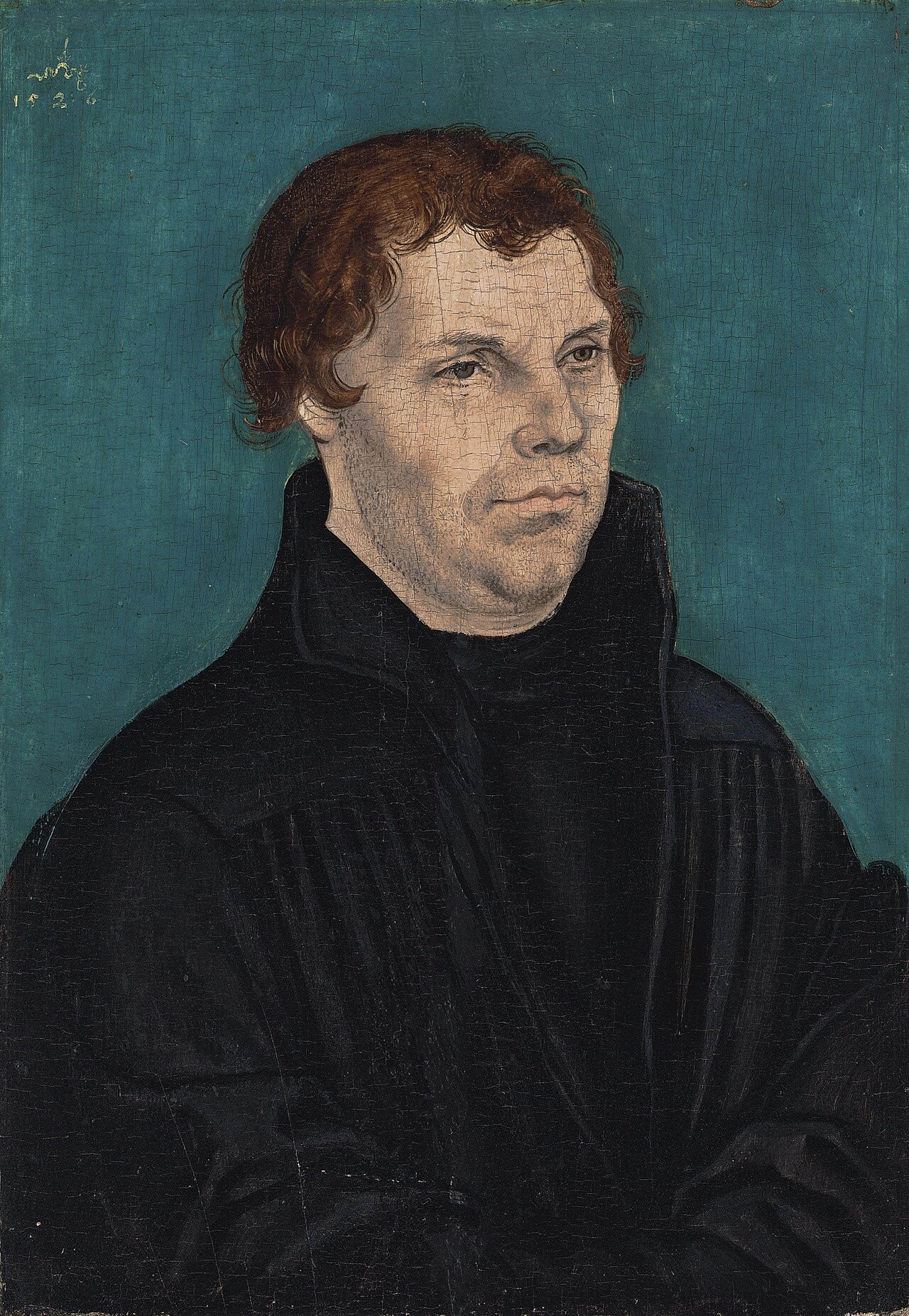
Lucas Cranach the Elder, Martin Luther, 1526
Cranach, Luther’s friend and neighbour in Wittenberg, painted him often; this portrait is from 1526. Three years earlier Luther had told the congregation at Leisnig that it could call its own preacher when the bishops would not.
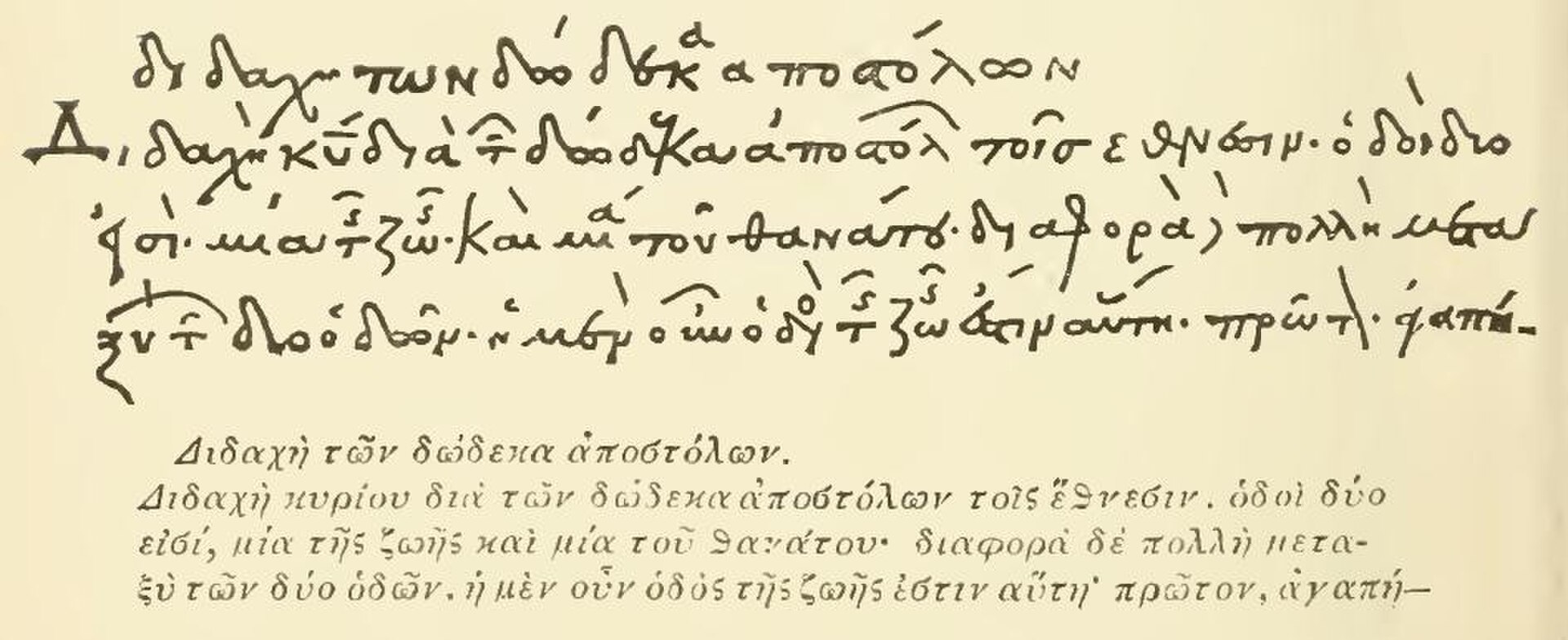
The Didache, title page of the Jerusalem manuscript (Codex Hierosolymitanus 54, 1056)
The Didache, a church manual from about the year 100, was lost for centuries until this manuscript, copied in 1056, was found in Constantinople and published in 1883. Its fifteenth chapter tells the congregation, “appoint for yourselves bishops and deacons.”
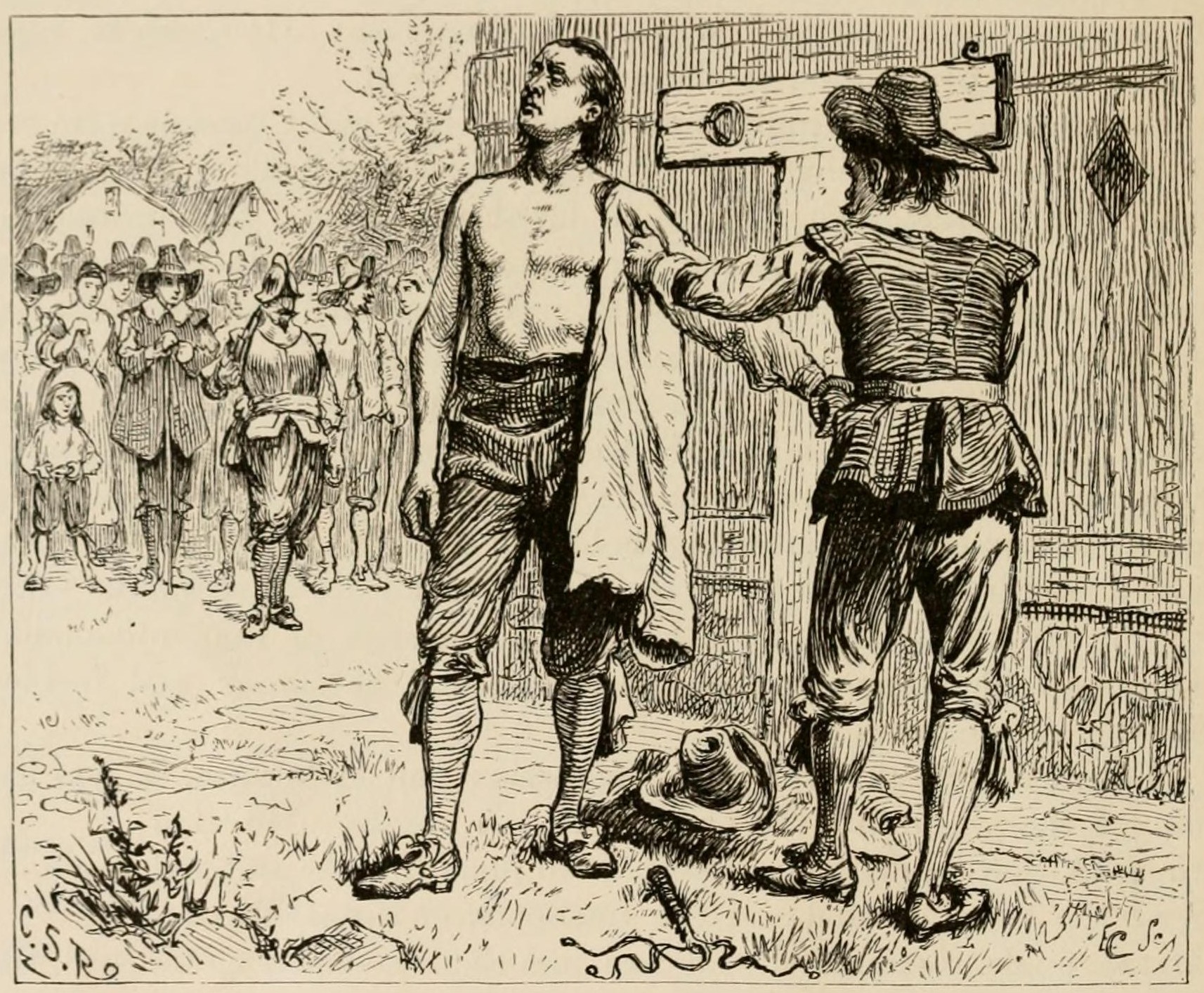
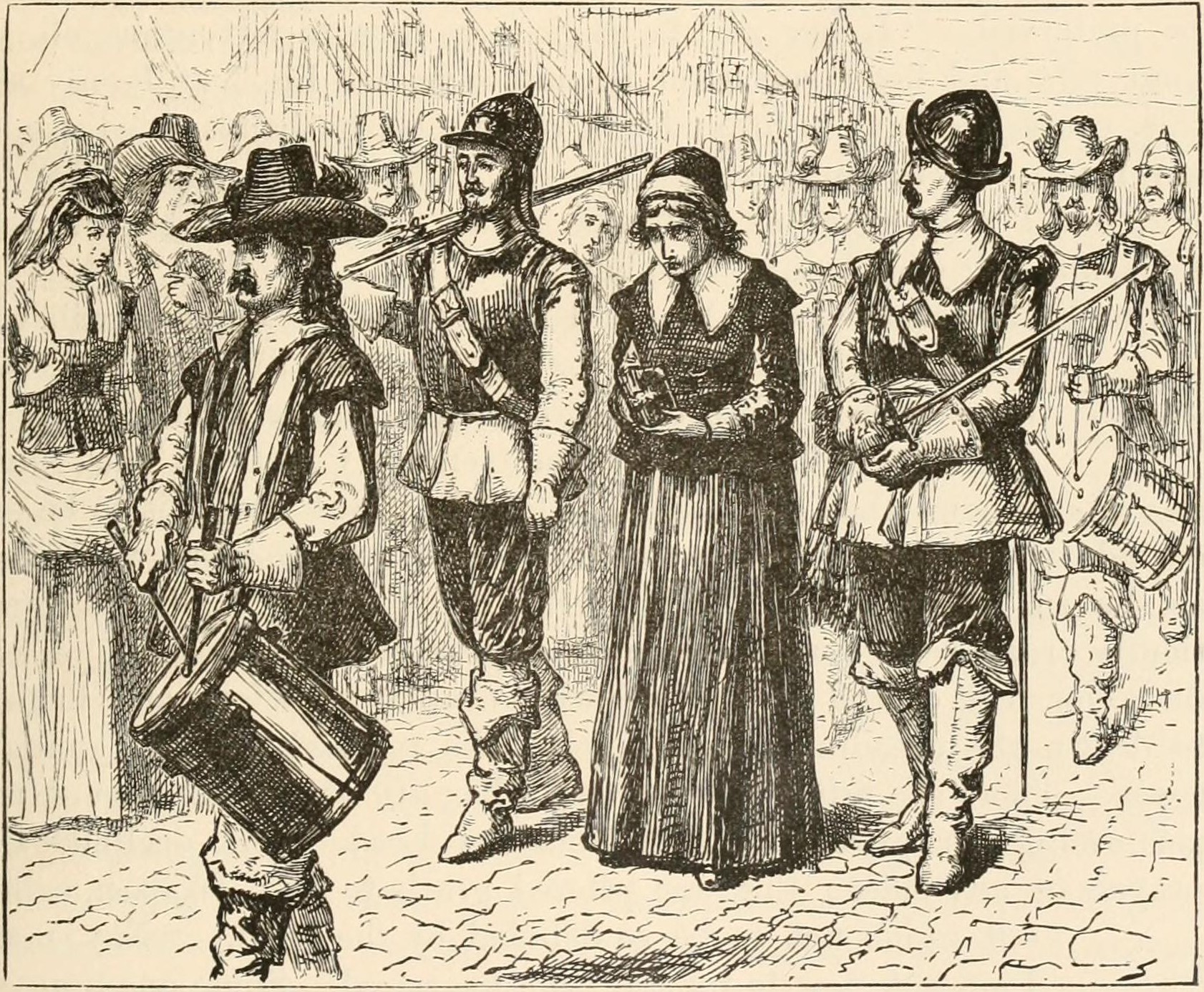
“Whipping of Obadiah Holmes” · C. S. Reinhart · Bryant & Gay, Popular History of the United States, vol. 2 (1878)
In July 1651 three Baptists from Rhode Island, John Clarke, Obadiah Holmes and John Crandall, held a service in a private house in Lynn, Massachusetts, and were arrested. Holmes refused to let friends pay his fine and was given thirty lashes in Boston.
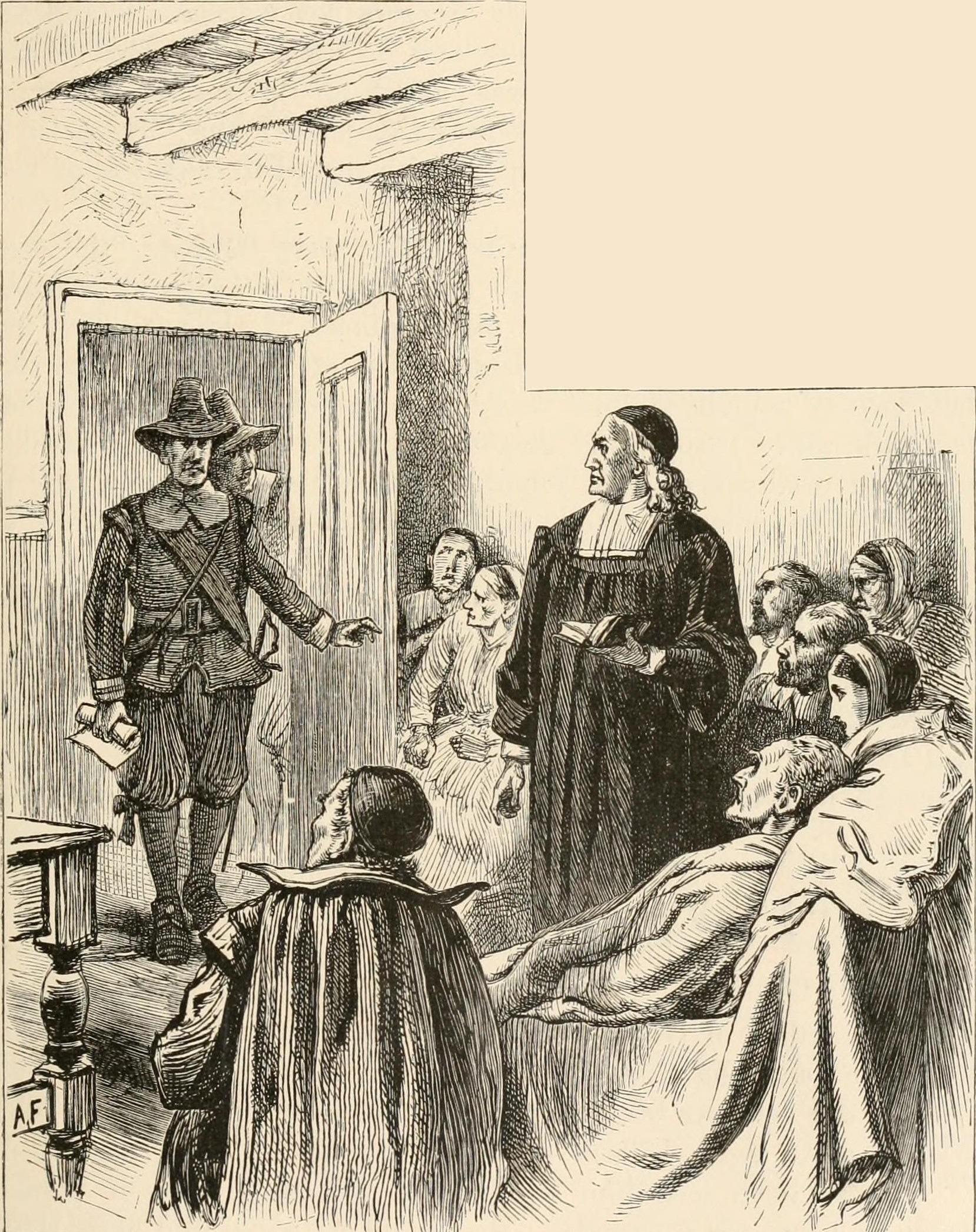
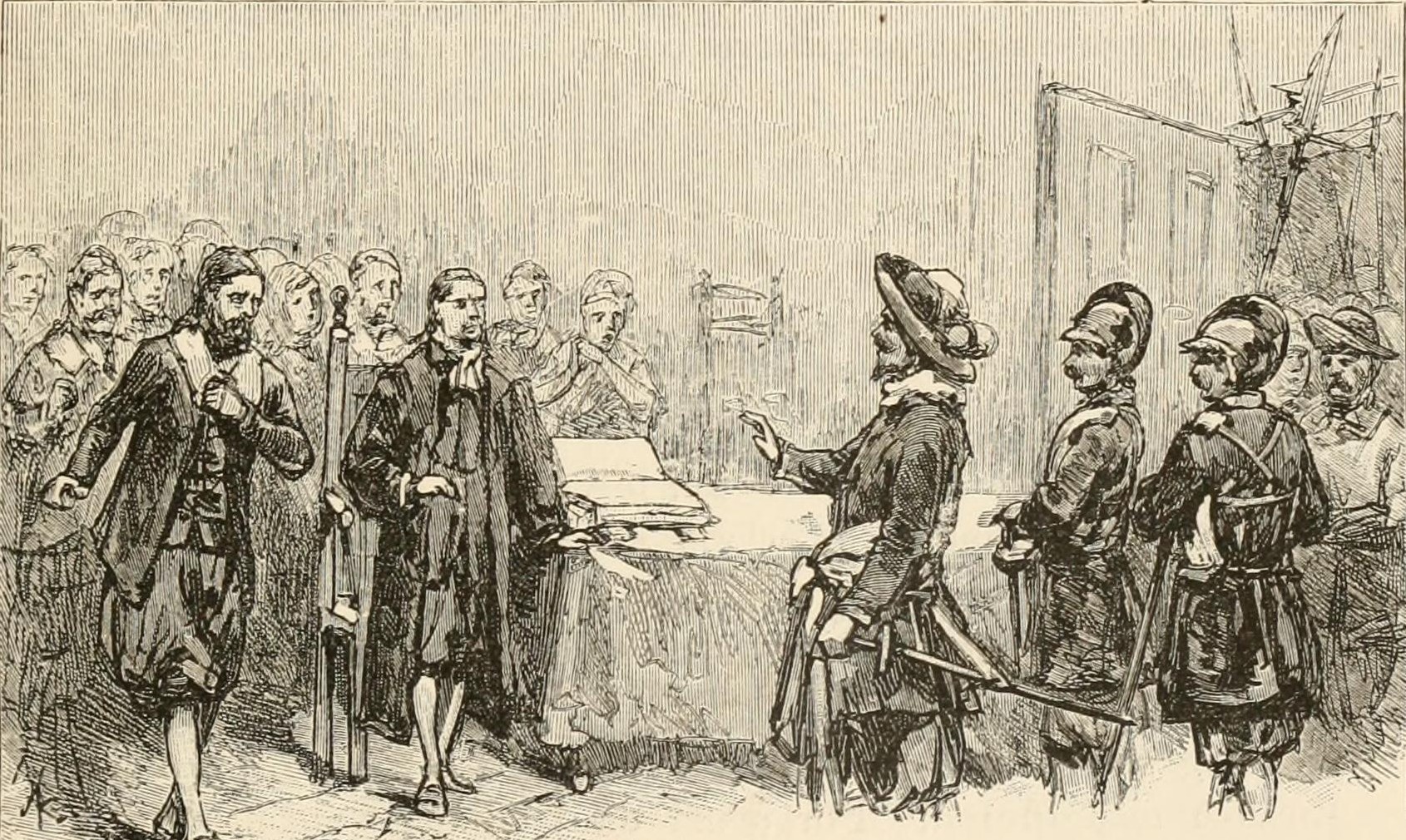
“The Meeting at Witter’s House” · A. Fredericks · Bryant & Gay, vol. 2 (1878)
The constables entered William Witter’s house during Clarke’s sermon and took the three men to the Puritan meeting-house. The court charged that by baptizing and serving the Supper Clarke treated its churches as “no Churches” and its ministers “as if all were a Nullity.”
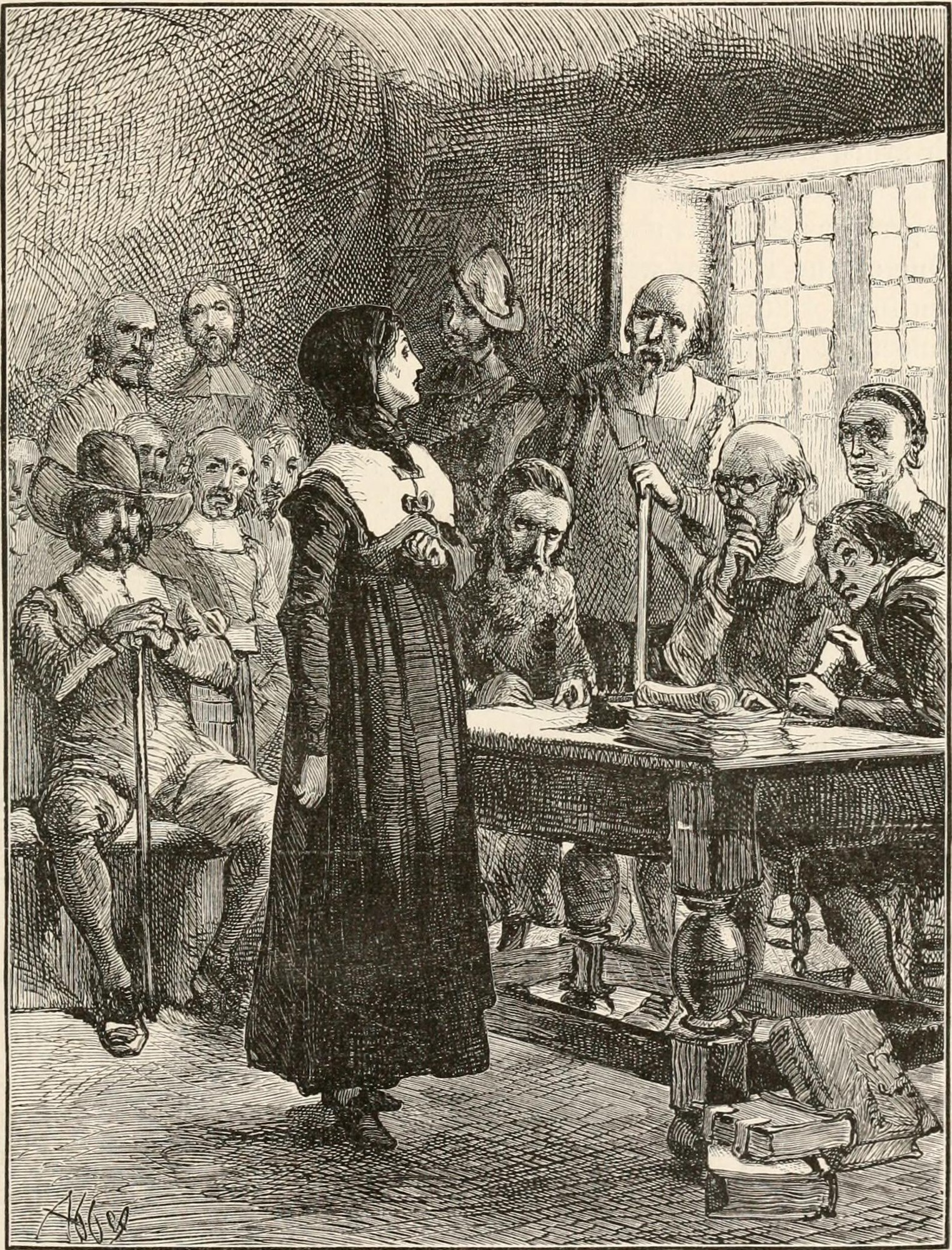
Anne Hutchinson held meetings in her Boston home to discuss the sermons, and drew more listeners than some ministers. In 1637 the General Court tried her, largely for teaching men, and banished her from the colony.
“Roger Williams’ Departure for Salem Island” · Cassell’s Illustrated History of England, vol. 3 (1865)
Roger Williams, minister at Salem, taught that magistrates had no power over conscience and that the colony’s churches should separate from the Church of England. Banished in 1635, he founded Providence and in 1638 the first Baptist church in America.
“Mary Dyer led to Execution” · C. S. Reinhart · Bryant & Gay, vol. 2 (1878)
Mary Dyer, a follower of Anne Hutchinson who became a Quaker, was banished from Massachusetts and returned to protest its laws against Quakers. She was hanged on Boston Common on June 1, 1660.
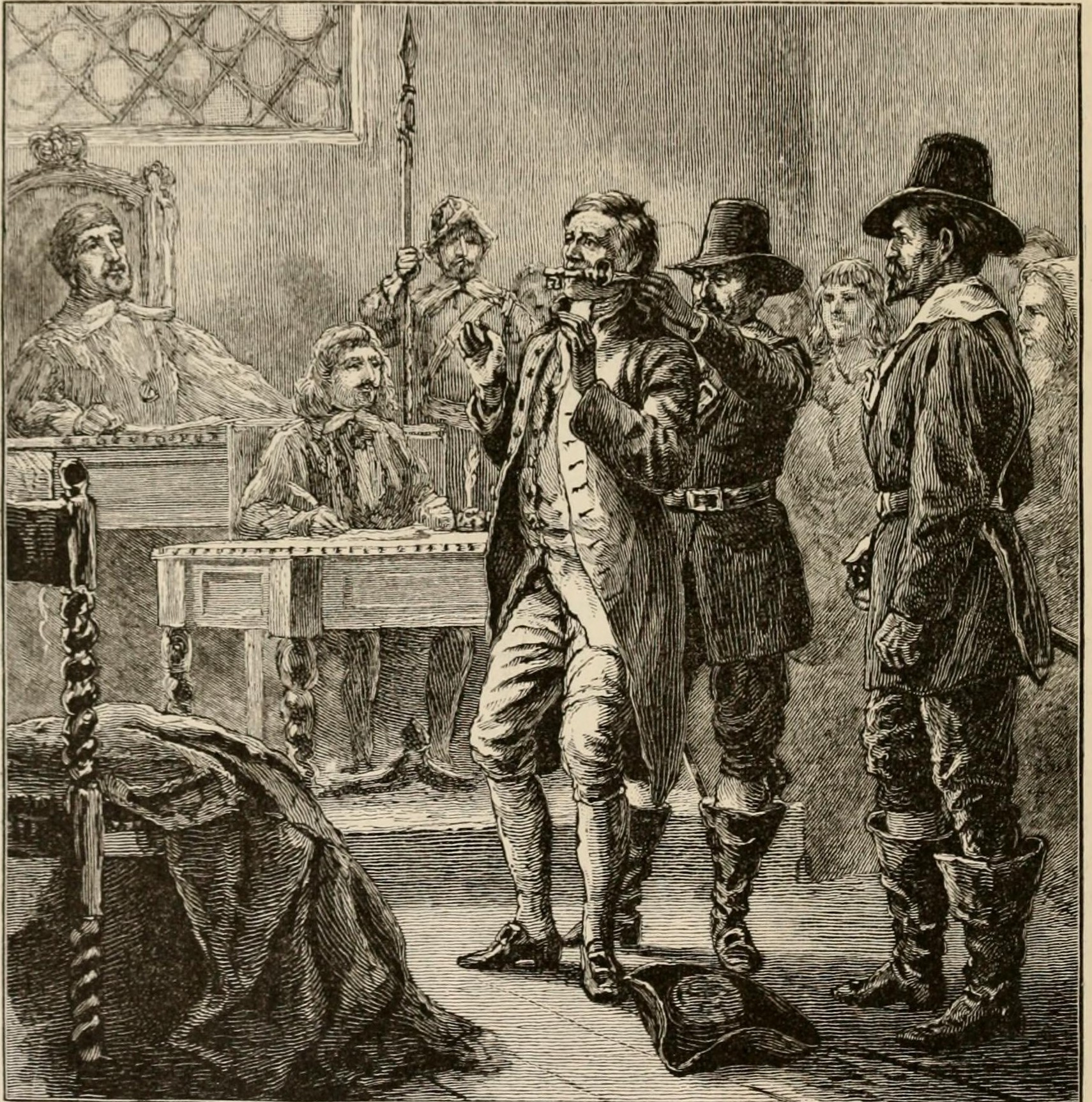
“Norton’s Punishment” · W. M. Cary · Bryant & Gay, vol. 2 (1878)
In 1658 the Quaker preacher Humphrey Norton was tried in New Haven for speaking against its ministers. He was gagged in court, then whipped, branded with an H for heretic, and banished.
“Breaking up of a Puritan Meeting” · A. Kappes · Bryant & Gay, vol. 2 (1878)
In 1642 Puritans in Virginia asked New England for ministers, and three came. Governor Berkeley’s government required conformity to the Church of England, and in 1643 they were ordered out of the colony.
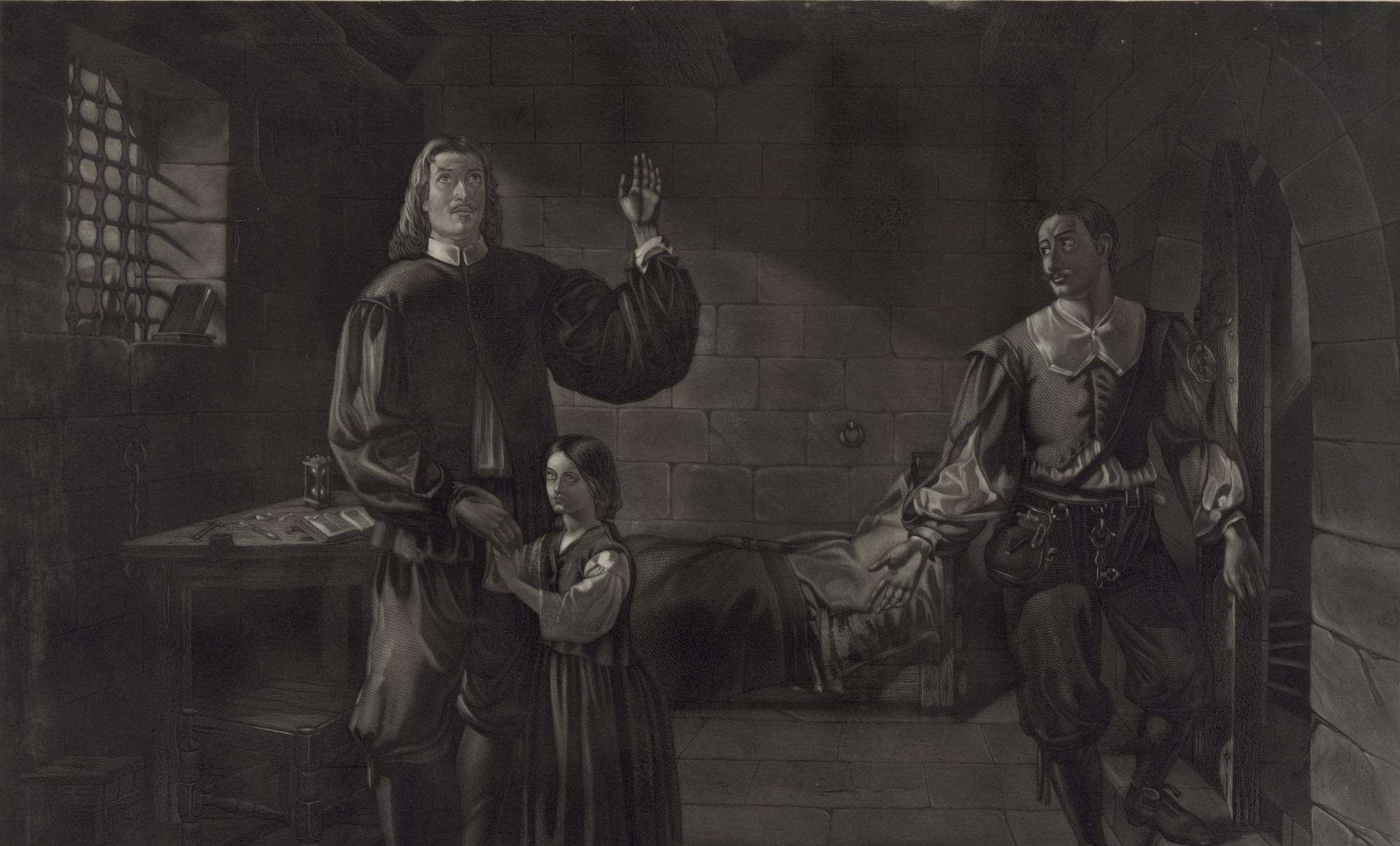
“John Bunyan in Bedford Jail, 1667” · Thomas Illman after T. G. Duvall · Library of Congress
John Bunyan, a tinker who preached to a Baptist-leaning congregation in Bedford, was arrested in 1660 for preaching without a licence. He spent most of the next twelve years in jail, where he began The Pilgrim’s Progress.
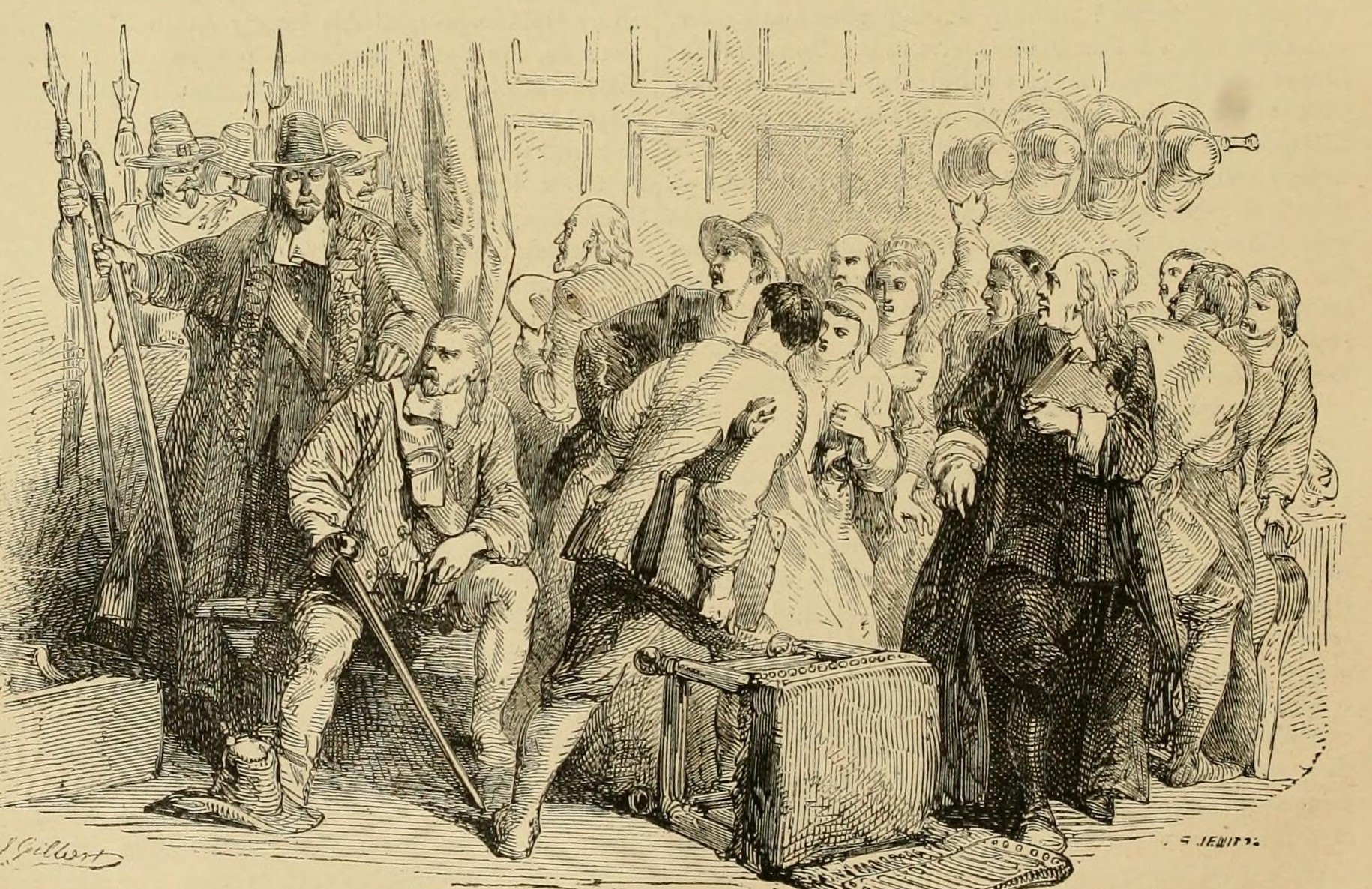
“Arrest of Nonconformists” · John Gilbert · Cassell’s, vol. 3 (1865)
After 1662 the Conventicle Acts made it a crime for more than five people outside a household to worship anywhere but the parish church. Ejected ministers who kept preaching to their people in houses and barns were arrested with their congregations.
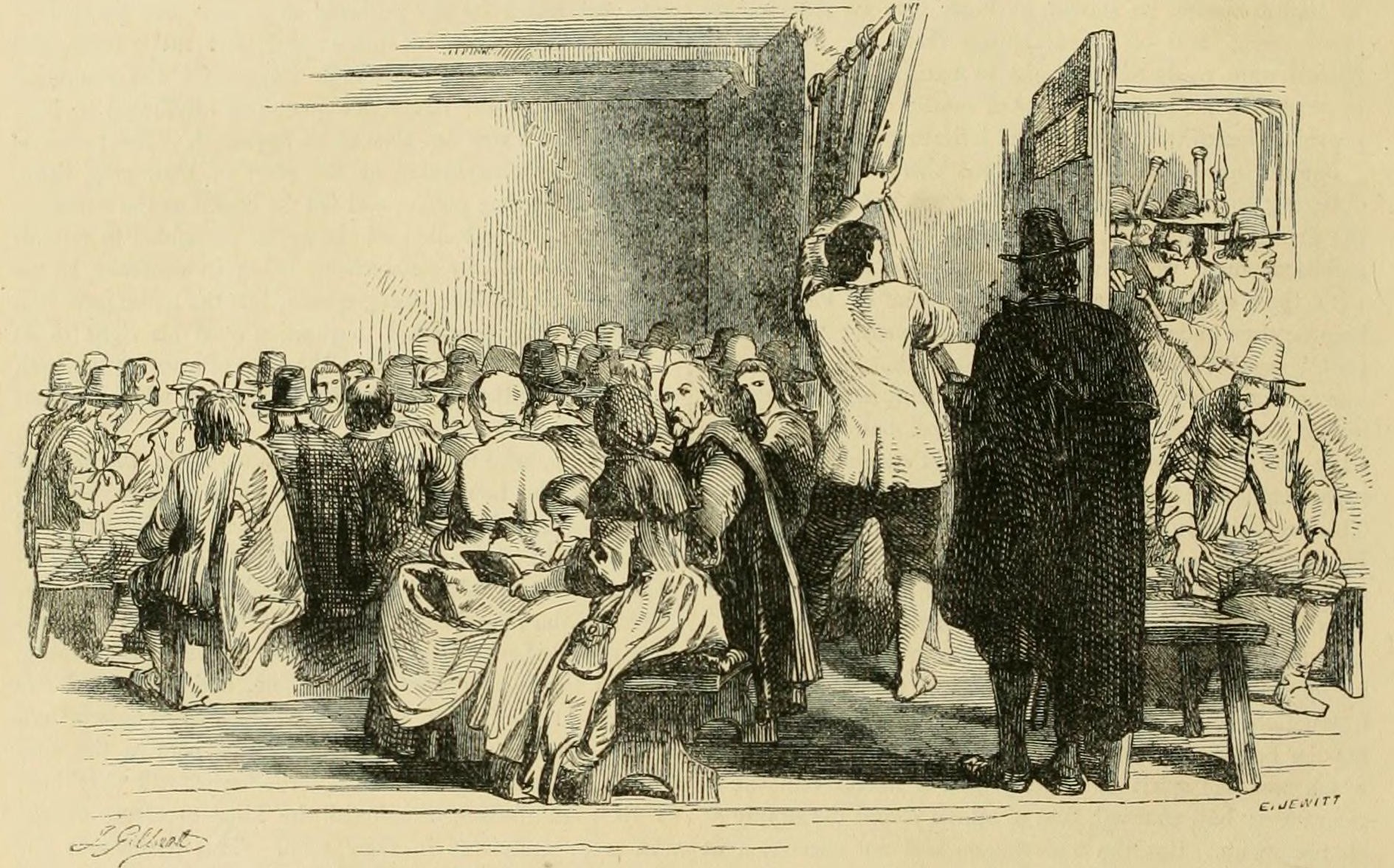
“Arrest of Nonconformists” · John Gilbert · Cassell’s, vol. 3 (1865)
Under James I, separatist congregations that met apart from the parish church did so in secret. Some of them fled to Holland, and from there the Pilgrims sailed for Plymouth in 1620.
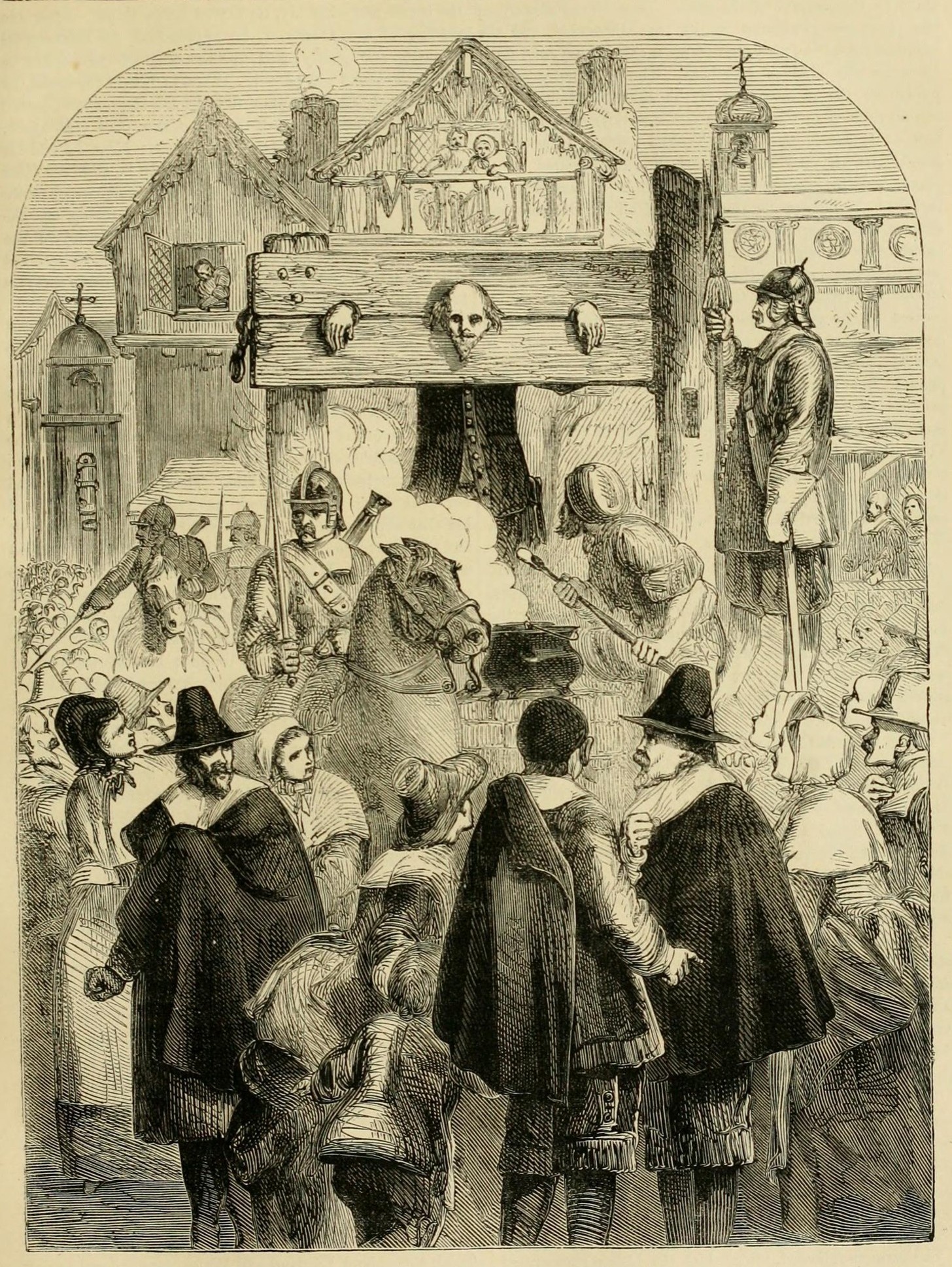
“Prynne in the Pillory” · Cassell’s, vol. 3 (1865)
William Prynne, a Puritan lawyer, attacked the bishops in print and was twice sentenced by the Star Chamber under Archbishop Laud. In 1637 he stood in the pillory and had the stumps of his ears cut off.
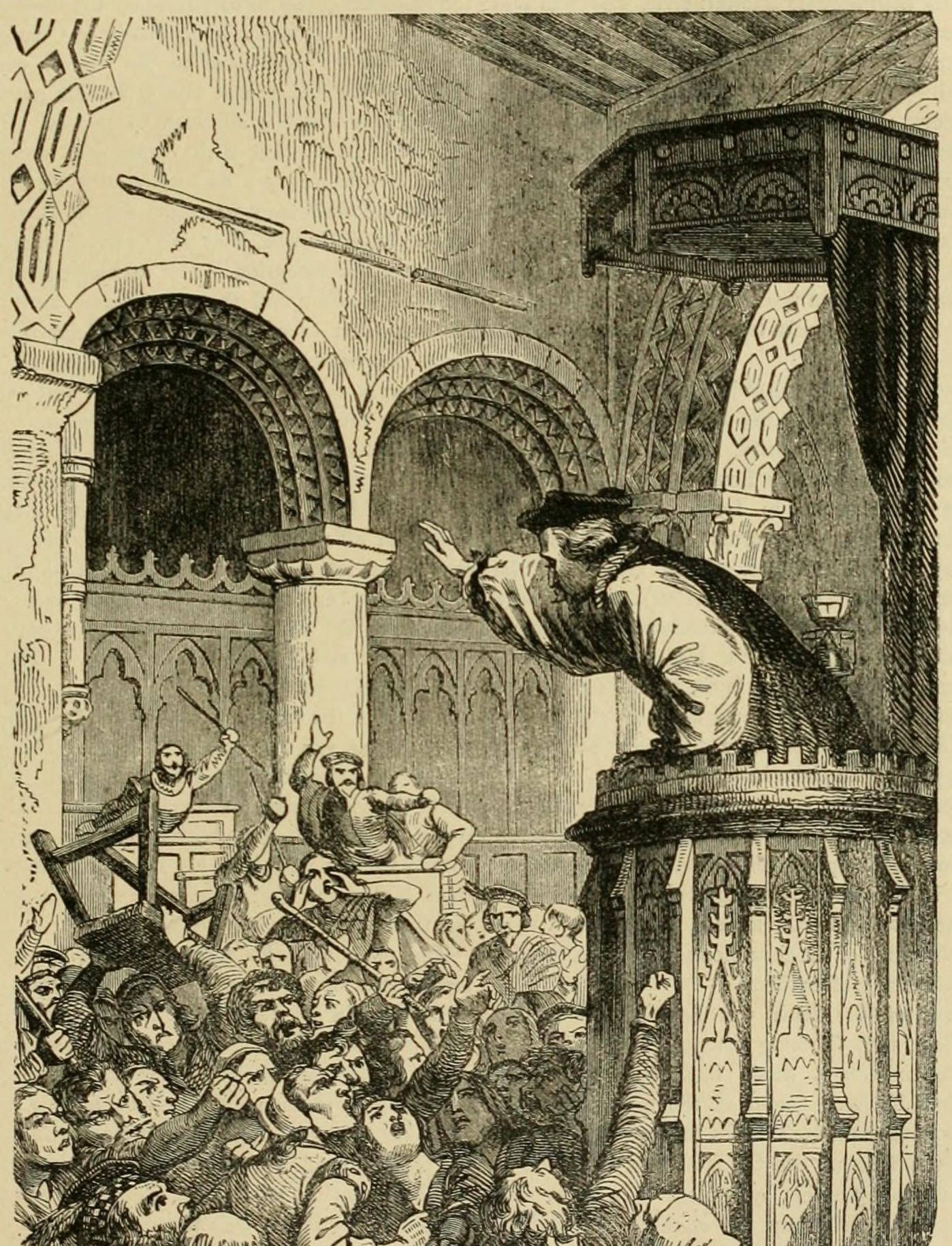
“The Affray in the High Church, Edinburgh” · Cassell’s, vol. 3 (1865)
On July 23, 1637, the new Prayer Book that Charles I and Laud imposed on Scotland was read for the first time in St Giles’ Cathedral, Edinburgh. Tradition says Jenny Geddes threw her stool at the dean, and the riot that followed led to the National Covenant of 1638.
“Death of Cameron” · Cassell’s, vol. 3 (1865)
After 1662 Scottish ministers who refused the bishops were ejected and preached to their people in the open fields, against the law. Richard Cameron, one of these field preachers, was killed by government dragoons at Airds Moss in 1680.
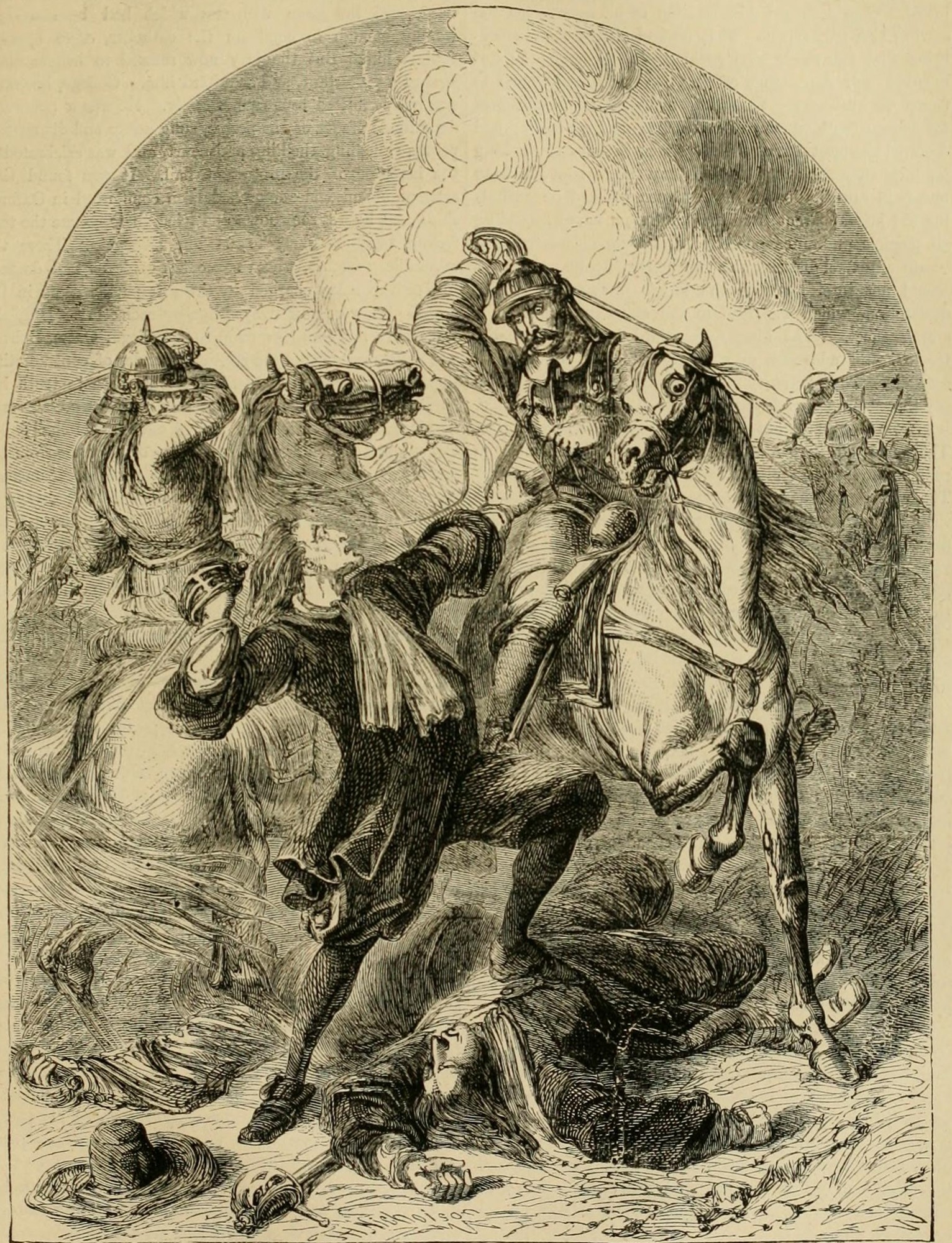
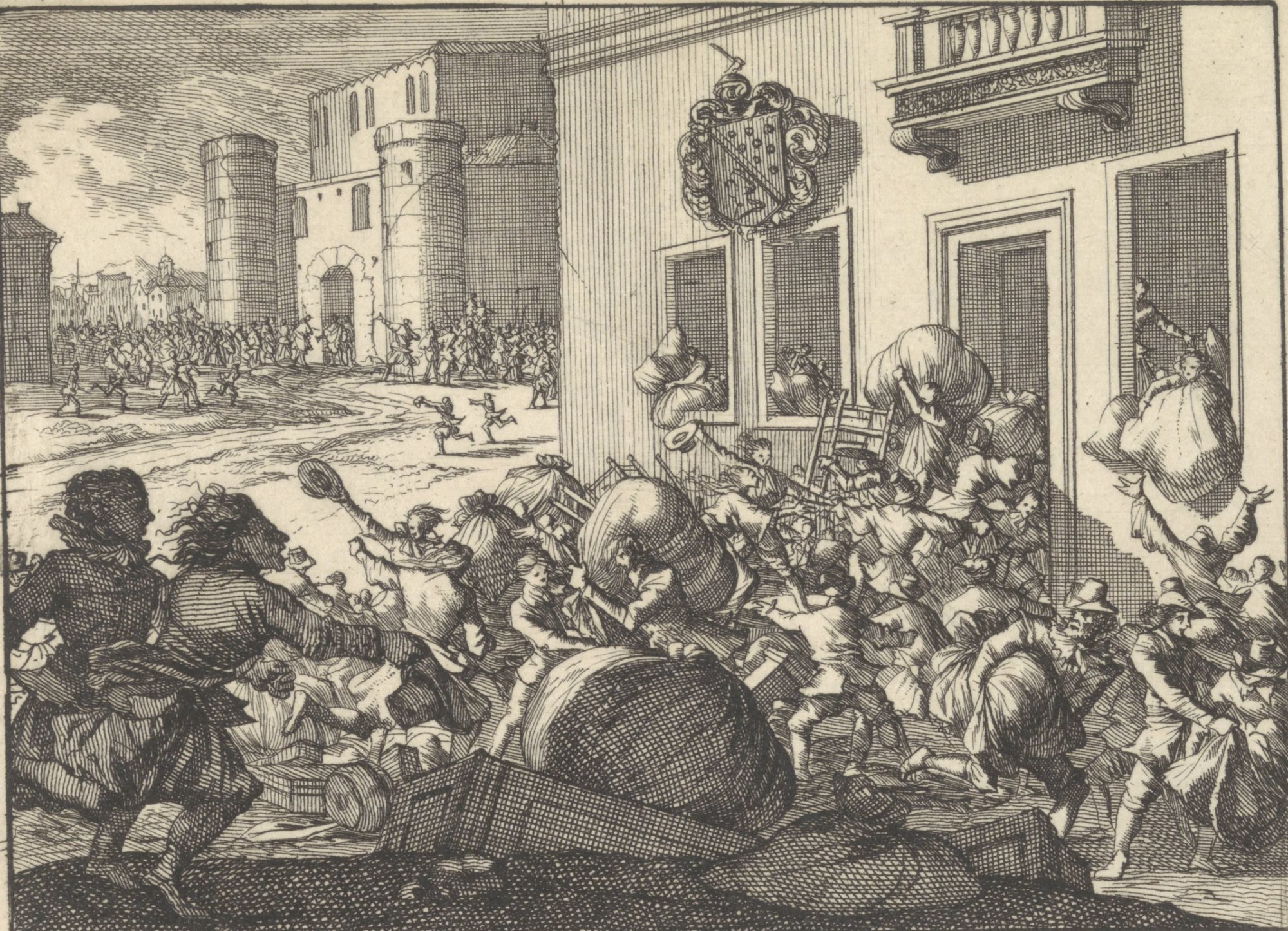
In 1640, as Parliament turned against the bishops, a London crowd attacked Lambeth Palace, home of Archbishop William Laud. Within a few years episcopacy was abolished, Laud was beheaded (1645), and loyal Anglican clergy were ejected in their turn.
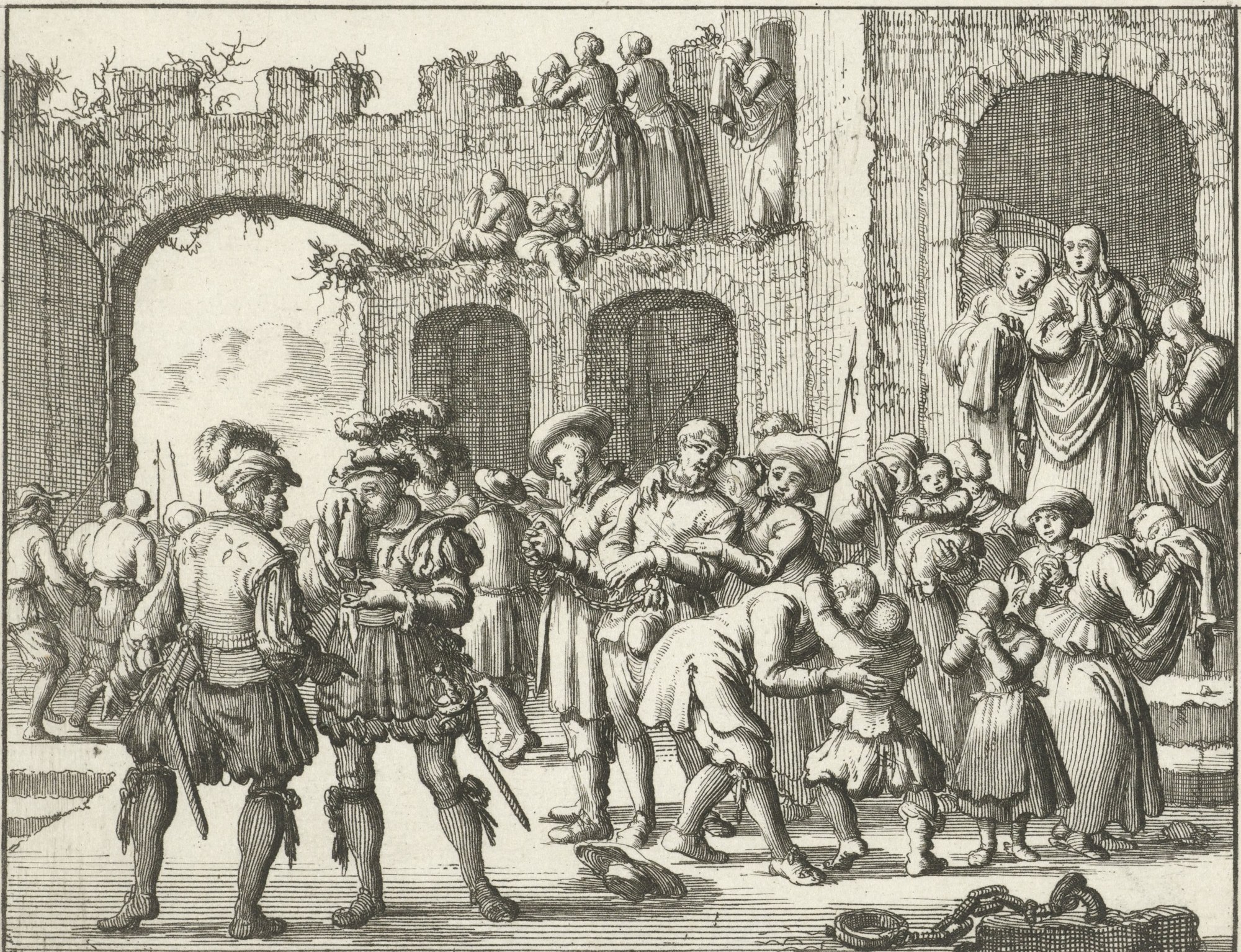
Jan Luyken, Martyrs Mirror (1685) · Rijksmuseum
Jan Luyken’s etchings for the 1685 Martyrs Mirror record the Anabaptists put to death or exiled by Catholic and Protestant governments alike. Here a group of Anabaptists, chained together, are led away from their families in 1540.
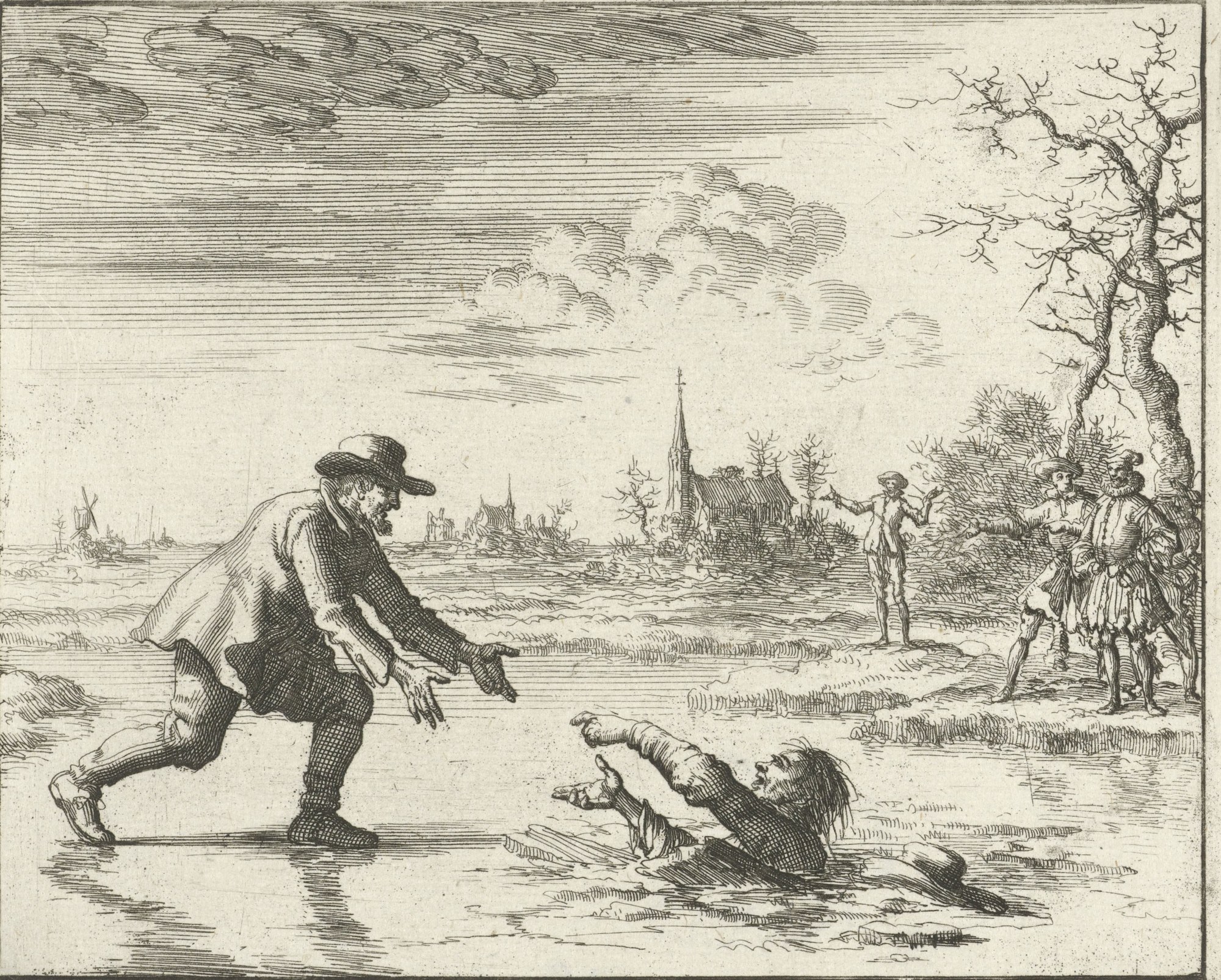
Jan Luyken, Martyrs Mirror (1685) · Rijksmuseum
In 1569 Dirk Willems, an Anabaptist escaping from prison in the Netherlands, crossed a frozen pond, and the man chasing him fell through the ice. Willems turned back and saved him, was recaptured, and was burned at the stake.
The Synod of Dort in session (1618–19) · Rijksmuseum
The Synod of Dort (1618–19) met to settle the Reformed churches’ quarrel over predestination. It condemned the Remonstrants, seated here at the table in the middle, and some two hundred of their ministers were removed from their pulpits.
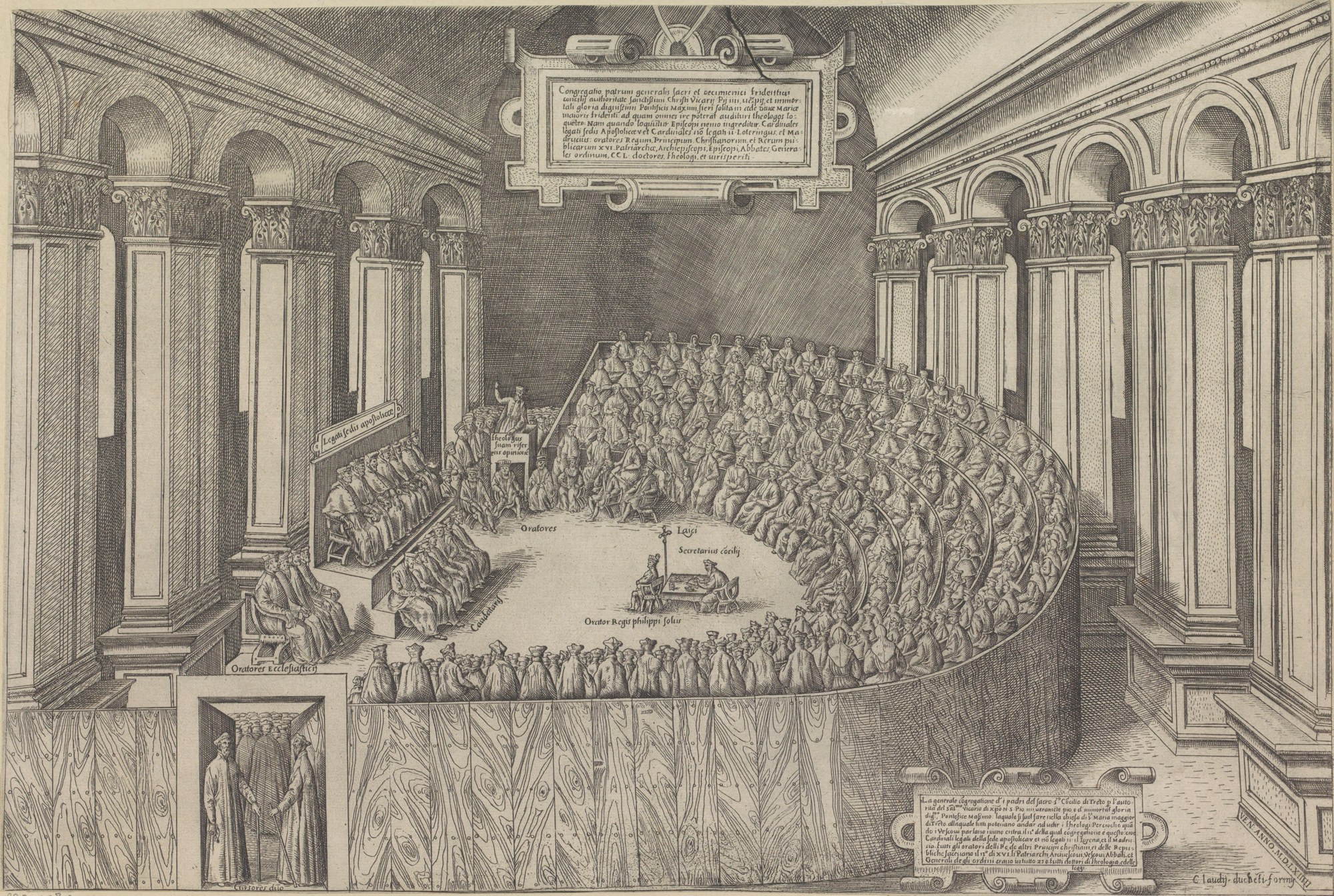
A general session of the Council of Trent · Claudio Duchetti, Venice (1565) · Rijksmuseum
The Council of Trent (1545–63) was Rome’s answer to the Reformation. It defined the sacrament of orders and condemned anyone who held that ministers called only by the people or the civil power are true ministers.
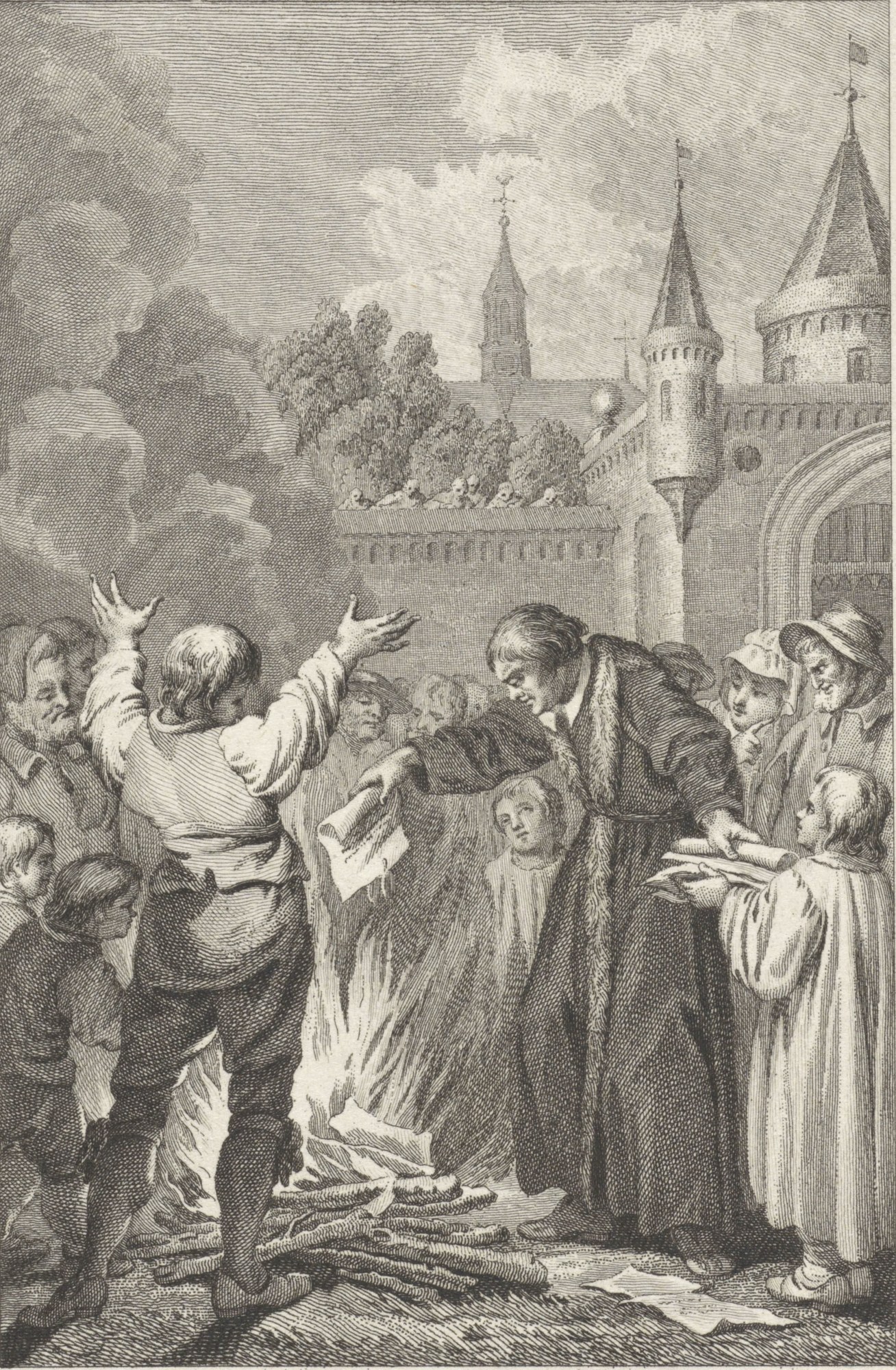
On December 10, 1520, outside Wittenberg’s Elster Gate, Luther burned the papal bull that threatened him with excommunication, together with books of canon law. Rome excommunicated him the next month.
Eduard Hildebrandt, View of the Hagia Sophia in Constantinople, c. 1852
Constantinople rejects Rome.
Eduard Hildebrandt, View of the Hagia Sophia in Constantinople, c. 1852
Constantinople, on the Latins (1755)
“…knowing only one, our own, Holy Catholic and Apostolic Church, acknowledge only her Sacraments… and such as come over to us from them [the Latins] we receive as unordained and unbaptized.”
Patriarchs of Constantinople, Alexandria and Jerusalem, the Oros of 1755 · tr. William Palmer (1853)
Cyril Lucaris, Patriarch of Constantinople, whose Calvinist confession the Synod of Jerusalem condemned · portrait, Geneva, 1632
The Orthodox reject the Protestants.
Cyril Lucaris, Patriarch of Constantinople, whose Calvinist confession the Synod of Jerusalem condemned · portrait, Geneva, 1632
Jerusalem, on the Calvinists (1672)
“…the dignity of the Bishop is so necessary in the Church, that without him, neither Church nor Christian could either be or be spoken of. For he, as a successor of the Apostles, having received in continued succession by the imposition of hands… is a fountain of all the Mysteries…”
Synod of Jerusalem, Confession of Dositheus, Decree X (1672) · tr. Robertson
A general session of the Council of Trent · Claudio Duchetti, Venice (1565) · Rijksmuseum
Rome rejects the Reformers.
A general session of the Council of Trent · Claudio Duchetti, Venice (1565) · Rijksmuseum
Rome, on ministers made by the people (1563)
“…all those who, being only called and instituted by the people, or by the civil power and magistrate, ascend to the exercise of these ministrations… are not ministers of the church, but are to be looked upon as thieves and robbers, who have not entered by the door.”
Council of Trent, Session XXIII, ch. 4 (1563) · tr. Waterworth
Pope Leo XIII (r. 1878–1903)
Rome rejects the Anglicans.
Pope Leo XIII (r. 1878–1903)
Rome, on Canterbury (1896)
“…we pronounce and declare that ordinations carried out according to the Anglican rite have been, and are, absolutely null and utterly void.”
Leo XIII, Apostolicae Curae §36 (1896)
The Second Vatican Council in St Peter’s · Lothar Wolleh · CC BY-SA 3.0
Rome rejects the Protestants.
The Second Vatican Council in St Peter’s · Lothar Wolleh · CC BY-SA 3.0
Rome, on the Protestants (1964)
“…we believe [Protestants] have not retained the proper reality of the eucharistic mystery in its fullness, especially because of the absence of the sacrament of Orders…”
Second Vatican Council, Unitatis Redintegratio 22 (1964)
The Second Vatican Council in St Peter’s · Lothar Wolleh · CC BY-SA 3.0
Rome, today (2007)
“According to Catholic doctrine, these Communities do not enjoy apostolic succession in the sacrament of Orders… [they] cannot, according to Catholic doctrine, be called ‘Churches’ in the proper sense.”
Congregation for the Doctrine of the Faith, Responses to Some Questions Regarding… the Doctrine on the Church (2007)
August Noack, Religionsgespräch zu Marburg 1529 (detail), 1867–69
Protestants reject each other.
August Noack, Religionsgespräch zu Marburg 1529 (detail), 1867–69
The Lutherans, at Marburg (1529)
“…we decreed by unanimous consent that they are strangers to the communion of the Christian church, and are not to be acknowledged by us as brothers and members of the church…”
Johannes Brenz, on the Marburg Colloquy, November 14, 1529 · tr. from the Latin
August Noack, Religionsgespräch zu Marburg 1529 (detail), 1867–69
Wittenberg, on the Zwinglians’ Supper (1533)
“…whoever knows of his pastor that he openly teaches Zwinglian doctrine should avoid him, and rather do without the Sacrament all his life than receive it from him, yes, even die over it and suffer everything.”
Martin Luther, letter to the Christians at Frankfurt (1533) · tr. from the German
The Book of Common Prayer (1662), title page
Anglicans reject the Presbyterians.
The Book of Common Prayer (1662), title page
Canterbury, on the Presbyterians (1662)
“…no man shall be accounted or taken to be a lawful Bishop, Priest, or Deacon… except he… hath had Episcopal Consecration, or Ordination.”
The Ordinal, Preface, Book of Common Prayer (1662)
Anglicans reject the Methodists.
An Anglican priest, on the Methodists (1785)
“Had they had patience a little longer, they would have seen a real Bishop in America… His ordinations would be indeed genuine, valid, and episcopal. But what are your poor Methodists now? Only a new sect of Presbyterians.”
Charles Wesley, postscript to a letter to Dr. Thomas B. Chandler, April 28, 1785
John Rogers Herbert, Assertion of Liberty of Conscience by the Independents of the Westminster Assembly · Parliamentary Art Collection
Presbyterians reject the Independents.
John Rogers Herbert, Assertion of Liberty of Conscience by the Independents of the Westminster Assembly · Parliamentary Art Collection
The London Presbyterians, on ordination by the people (1654)
“For all Ordination by the people is null and void, as being not only not grounded upon Scripture, but against Scripture. And to intrude into the Ministerial Office without Ordination, is as the sin of Corah and his company.”
Provincial Assembly of London, Jus Divinum Ministerii Evangelici (1654)
The drowning of Felix Manz, Zurich, 1527 · Jan Luyken, Martyrs Mirror (1685), hand-colored
The Reformed reject the Anabaptists.
The drowning of Felix Manz, Zurich, 1527 · Jan Luyken, Martyrs Mirror (1685), hand-colored
Zurich, on the Anabaptists (1527)
“…their own self-grown sect, factions and gatherings, under the appearance and cloak of a Christian assembly and church…”
Zurich Council, sentence of Felix Manz, January 5, 1527 · tr. from the German
Anabaptists reject the Reformed.
Menno, to the Zwinglians and the rest (1539)
“…you boast that you are the sent teachers, and your churches the churches of Christ… Romans, Lutherans and Zuinglians… your ministry and services are not of God and his word…”
Menno Simons, Foundation of Christian Doctrine (1539/40) · tr. 1871
Constables break up a Baptist meeting at Lynn, Massachusetts, 1651 · Alfred Fredericks, in Bryant & Gay (1878)
Congregationalists reject the Baptists.
Constables break up a Baptist meeting at Lynn, Massachusetts, 1651 · Alfred Fredericks, in Bryant & Gay (1878)
Boston, on the Baptists (1665)
“…presuming… to declare themselves to be a church of Christ… they being… privates… that haue intermedled in the administration of those ordinances, that are propper only to office trust… This Court… doe judge meete to declare, that the sajd Gold & company are no orderly church assembly…”
Massachusetts General Court, October 11, 1665
Baptists reject everyone.
A Landmark Baptist, on the Pedobaptists (1854)
“Believing their preachers unbaptized, we cannot with the shadow of propriety recognize them as gospel ministers… The official acts of Pedobaptist preachers have no validity in them. Their falsely so-called baptisms are a nullity…”
J. M. Pendleton, An Old Landmark Re-set (1854)
Who possesses the authority?
Every church has its line
Catholics: unbroken line of bishops, back to Peter.
Presbyterians: unbroken body of elders, back to apostles.
Baptists: unbroken line of Baptists, back to John the Baptist.
Or something else?
Do large segments of Christianity have
no valid orders,
no valid ministers,
no valid sacraments,
and are thus not churches?
There is one way to avoid that conclusion.
The authority flows from the people.
This is Alexander Campbell’s position.
Alexander, later
“The community, the church, the multitude of the faithful, are the fountain of official power. This power descends from the body itself — not from its servants. Servants made by servants are servants of servants…”
Alexander Campbell, The Christian System (1839)
The whole church remembers · a resource
What the whole church knows
The priesthood of all · the consent of all baptism that unites
The priesthood of all
“The New Testament never uses the term ‘priesthood’ or ‘priest’ (hiereus) to designate the ordained ministry… the term is reserved… for the unique priesthood of Jesus Christ and… for the royal and prophetic priesthood of all baptized.”
World Council of Churches, Baptism, Eucharist and Ministry (1982), Ministry 17
Orthodox
“The first, the basic definition of man is that he is the priest.”
Alexander Schmemann, For the Life of the World (1963)
Why it is beautiful
“Juridical power is a substitute for love in actual social life… In the Church, where perfect love dwells, there is no need for such a substitute.”
Nicolas Afanasiev, The Church of the Holy Spirit, p. 274
Baptism
“Our common baptism, which unites us to Christ in faith, is thus a basic bond of unity.”
World Council of Churches, Baptism, Eucharist and Ministry (1982), Baptism 6
“To the intent that now unto the principalities and powers in heavenly places might be known by the church the manifold wisdom of God…”
Ephesians 3:10 (KJV)
What the whole church confesses, we try to practice every Lord’s day.
The church as ekklēsia · a resource
The word Paul chose was the name of the citizens’ assembly
Athens: the open floor
“Freedom’s mark is also seen in this: Who hath wholesome counsel to declare unto the state?… What greater equality can there be in a city?”
“…it shall be determined in a legal congregation… And when he had said these things, he dismissed the congregation.”
Acts 19:39–41 · The Living Oracles, Alexander Campbell’s New Testament (1826)
The scholars
“…Paul wished to portray his communities as alternative organizations existing alongside the civic assemblies… in many respects, the functioning of the Christian ekklēsia mirrors the operations of the civic assemblies.”
George H. van Kooten, New Testament Studies (2012)
The Christian assembly
“When you are come together, each of you has a psalm, has a discourse, has a foreign language, has a revelation, has an interpretation!”
1 Corinthians 14:26 · The Living Oracles, Alexander Campbell’s New Testament (1826)
The floor passes · 1 Corinthians 14:29–31
“…and let the others judge.”
“…you can all prophesy, one by one,”
“…that all may learn, and all may be comforted.”
The Living Oracles, Alexander Campbell’s New Testament (1826)
The assembly decides
“…this punishment, which was inflicted by the majority.” 2 Corinthians 2:6
“…who was also chosen by the congregations our fellow-traveller.” 2 Corinthians 8:19
The Living Oracles, Alexander Campbell’s New Testament (1826)
The translators’ fight
“…where I found this word ecclesia, I interpreted it by this word congregation.”
William Tyndale, answering Thomas More (1531)
Campbell takes Tyndale’s side
“Wherever the word church is found in the common version, congregation will be found in this.”
Alexander Campbell, appendix to the Living Oracles
And back again
“…modern democracy began with the experience of the Puritan congregations.”
A. D. Lindsay, The Modern Democratic State (1943)
Not a building. Not a clergy. The people, assembled.
Confession or constitution · a resource
What governs the church?
The Westminster Confession, and the Declaration and Address
The other answer · Westminster Confession, chapter 30
30.1 “The Lord Jesus, as King and Head of his church, hath therein appointed a government, in the hand of church officers…”
30.2 “To these officers the keys of the kingdom of heaven are committed…”
Westminster Confession of Faith, American text (1788)
Proposition 4
“…the New Testament is as perfect a constitution for the worship, discipline, and government of the New Testament Church… as the Old Testament was for the worship, discipline, and government of the Old Testament Church…”
Thomas Campbell, Declaration and Address (1809)
Proposition 2
“That although the Church of Christ upon earth must necessarily exist in particular and distinct societies, locally separate one from another, yet there ought to be no schisms, no uncharitable divisions among them.”
Thomas Campbell, Declaration and Address (1809)
Not a confession over the church. The New Testament is its constitution.
Alexander, 1843
“Whenever, then, a christian community legitimately arises… when it appoints officers, and when they dispense ordinances, they are as divine and authoritative as any other officers and ordinances in any christian community on earth. This, we regard, as our true position as a community of churches…”
Alexander Campbell, debate with N. L. Rice (1843)
Side path · to an Episcopal bishop
Campbell and the bishop
Alexander, to an Episcopal bishop
“There is no debate between you and me—none between Bishop Onderdonk and Presbyterians, or between Dr. Cook and his Methodist brethren, about episcopacy… We all agree that the christian communities are of necessity, and by divine authority, under an episcopacy—an oversight… and there is not between us any serious difficulty about the ordination of these officers, by prayer, fasting, and the imposition of hands.”
Alexander Campbell, to Bishop James Otey, Millennial Harbinger (1835)
Alexander, 1824
“An individual church or congregation of Christ’s disciples… is ‘the highest court of Christ’ on earth.”
Alexander Campbell, Christian Baptist, July 5, 1824
“The clergy are the opposite to the laity. Both these terms are used in Scripture to denote God’s people. Trace them to their origin and we find no difference.”
Alexander Campbell, reply to the Synod, November 1810
The brethren
“Every thing essential to appointment, call, or ordination was vested in the minds of the brethren. Their desires, however expressed, gave the office to the candidate…”
Alexander Campbell, Christian Baptist, 1826
“You see that ordination is not a mere unmeaning thing, but consists in the choice of the people, which must be hearty…”
Alexander Campbell, sermon on Titus 1:5 · in Richardson, Memoirs
Church government · a resource
Who governs the church?
What Jesus said, what Cane Ridge willed, and what Brush Run did.
To the gathered church
“…tell it unto the church: but if he neglect to hear the church, let him be unto thee as an heathen man and a publican. Verily I say unto you, Whatsoever ye shall bind on earth shall be bound in heaven…”
Matthew 18:17–18 (KJV)
“For where two or three are gathered together in my name, there am I in the midst of them.”
Matthew 18:20 (KJV)
Thomas Campbell on Matthew 18 · Appendix
“‘What ye bind on earth shall be bound in heaven’ is the awful sanction of the Church’s judgment, in justly rejecting any person. Take away this, and it has no sanction at all.”
Thomas Campbell, Declaration and Address (1809)
Every believer
“But ye are a chosen generation, a royal priesthood, an holy nation, a peculiar people…” 1 Peter 2:9 (KJV)
“And hath made us kings and priests unto God and his Father…” Revelation 1:6 (KJV)
“…they soon found that there was neither precept nor example in the New Testament for such confederacies as modern Church Sessions, Presbyteries, Synods, General Assemblies, etc.”
The Witnesses’ Address, appended to the Last Will and Testament, 1804
“Why do we contend for uninterrupted succession in ordination, seeing it is not the persons called bishops who have the power, but the people?”
Alexander Campbell · in Richardson, Memoirs, sermon on Titus 1:5
Asked why he preached without authority
“Who has authority?
Who gave the Presbytery authority to license men?
Who gave the Presbytery authority to make laws for the Church?
Who gave the Presbytery authority to decide religious matters by vote?
Who gave the Presbytery authority to choose ministers?”
Alexander Campbell · in Richardson, Memoirs
What the hands do
“As to the form or ceremony of ordination, he did not regard it as conferring any authority, but as a public testimony that the persons ordained possessed the necessary authority.”
Robert Richardson, Memoirs of Alexander Campbell (1868)
Christ in the midst of two or three. Every other office answers to that.
Alexander, late 1811
“Why do we contend for uninterrupted succession in ordination, seeing it is not the persons called bishops who have the power, but the people?”
Alexander Campbell, 1811 · in Richardson, Memoirs
If the authority is the people’s, every church’s ministers can be recognized.
Not his usual argument
Don’t get me wrong.
A one-way door
Greville Ewing, 1797 · then a Church of Scotland minister
The established church must reject the independent.
James Haldane, 1801 · lay preacher, Leith Walk Tabernacle
The independent need not reject the established church.
Before him, Barton Stone’s presbytery.
The Springfield Presbytery, 1804 · the court gives up its power
“We will, that our power of making laws for the government of the church, and executing them by delegated authority, forever cease…”
The Last Will and Testament of the Springfield Presbytery
The Springfield Presbytery, 1804 · the congregation takes it up
“We will, that the church of Christ assume her native right of internal government—try her candidates for the ministry… and admit no other proof of their authority, but Christ speaking in them.”
“We will, that each particular church, as a body… choose her own preacher… and never henceforth delegate her right of government to any man or set of men whatever.”
The Last Will and Testament of the Springfield Presbytery
Before them, Martin Luther.
Luther
“…all Christians are truly of the ‘spiritual estate,’ and there is among them no difference at all but that of office…”
Martin Luther, To the Christian Nobility (1520)
Ordained in baptism
“For whoever comes out the water of baptism can boast that he is already consecrated priest, bishop and pope…”
Martin Luther, To the Christian Nobility (1520)
“…we are all priests, and there is no difference between us; that is to say, we have the same power in respect to the Word and all the sacraments. However, no one may make use of this power except by the consent of the community…”
Martin Luther, The Babylonian Captivity of the Church (1520)
1523
“…no one can deny that every Christian has God’s Word and is taught of God and anointed by Him to the priesthood.”
Martin Luther, Leisnig treatise (1523) · tr. Steinhaeuser
Luther, 1523 · on a preacher the congregation has called
“If the bishop does not confirm him, he is none the less confirmed by virtue of the call of the congregation.”
Martin Luther, Leisnig treatise (1523) · tr. Steinhaeuser
Before Luther, the early church.
“He who is to govern all, should be chosen by all.”
Leo the Great, bishop of Rome, Letter 10 (c. 445)
Carthage, c. 254
“…a people obedient to the Lord’s precepts… ought to separate themselves from a sinful prelate… especially since they themselves have the power either of choosing worthy priests, or of rejecting unworthy ones.”
Cyprian, bishop of Carthage, Epistle 67 (254) · tr. Wallis, ANF
Lyons, c. 180
“For all the righteous possess the [priestly] rank.”
Irenaeus of Lyons, Against Heresies 4.8.3 (c. 180) · tr. Roberts–Rambaut, ANF
The first church order
“Appoint, therefore, for yourselves bishops and deacons worthy of the Lord, men meek, and not lovers of money, and truthful and proved…”
Didache 15.1 (c. 100) · tr. Roberts–Donaldson
Rome, c. 96
“…those appointed by them, or afterwards by other eminent men, with the consent of the whole church, and who have blamelessly served the flock of Christ… cannot be justly dismissed from the ministry.”
1 Clement 44.3 (c. 96) · tr. Roberts–Donaldson, ANF
The whole church remembers.
Orthodox
“…the protector of religion is the very body of the Church, even the people themselves…”
Encyclical of the Eastern Patriarchs (1848), §17
Orthodox
“The gift of the Spirit that every member of the faithful receives in the sacrament of initiation is the charism of royal priesthood.”
Nicolas Afanasiev, The Church of the Holy Spirit, p. 3
Catholic
“…in this Church, as in an inverted pyramid, the top is located beneath the base. Consequently, those who exercise authority are called ‘ministers’, because, in the original meaning of the word, they are the least of all.”
Pope Francis, October 17, 2015
Baptism · the Synod on Synodality, 2024
“There is nothing higher than this baptismal dignity, equally bestowed upon each person…”
“…as well as constituting the basis of synodality, Baptism is also the foundation of ecumenism.”
Final Document of the Synod on Synodality, October 26, 2024, §21, §23
And before all of them, Jesus.
Matthew 18:18, 20
“Truly I tell you, whatever you bind on earth will be bound in heaven, and whatever you loose on earth will be loosed in heaven.
…For where two or three gather in my name, there am I with them.”
Matthew 18:18, 20, New International Version
The question, again
Who gave them that authority?
The answer
Christ.
Who serves the table?
The same priesthood keeps the table
“May they not, without a human priest to consecrate the way for them, approach the Lord’s table, and handle the loaf and cup?”
Alexander Campbell, The Christian System (1839), “Breaking the Loaf”
“…the royal priesthood may approach the Lord’s table without fear, inasmuch as they are consecrated to officiate by a blood…”
Alexander Campbell, The Christian System (1839), “Breaking the Loaf”
“…he that gives thanks for the loaf should break it not as the representative of the Lord, but after his example… And thus they as priests feast upon his sacrifice.”
Alexander Campbell, The Christian System (1839), “Breaking the Loaf”
Before us
“…where three are, a church is, albeit they be laics.”
Tertullian, On Exhortation to Chastity 7 (c. 210)
Scotland
“The apparent question at issue was: may a group of believers not set in order with a presbytery eat the Lord’s Supper or not?”
D. B. Murray, on the Scotch Baptists, Baptist Quarterly (1989)
Two or three
“…were only two christians in any place, such as on shipboard… they ought to commemorate the death of Christ on the first day of the week…”
Ballantine’s Essays on the Elder’s Office, reprinted in Stone’s Christian Messenger (1835)
“Is there any thing to be done at the table of the Lord, which any brother, who can give thanks for a crucified Savior, and repeat the words of the institution, cannot do?”
The same essay, in Stone’s Christian Messenger (1835)
The test of a clergy
“He would not tolerate a disciple in his church to baptize a candidate, nor to ‘administer the Lord’s supper,’ nor to pray over the loaf or the cup.”
Alexander Campbell, Millennial Harbinger (1830)
Campbell’s model church
From his memorandum book
Who presided
“Not having any person whom they regarded as filling Paul’s outlines of a bishop, they had appointed two senior members, of a very grave deportment, to preside in their meetings. These persons were not competent to labor in the word and teaching; but they were qualified to rule well…”
Alexander Campbell, The Christian System (1839), “Breaking the Loaf”
Every member a part
“He then called upon a brother… to read a section of the evangelical history.”
“…the president called upon a brother to pray in the name of the congregation.”
“…the whole congregation, brethren and sisters, pronounced aloud the final Amen.”
Alexander Campbell, The Christian System (1839), “Breaking the Loaf”
At the table
“…he took a small loaf from the table, and in one or two periods gave thanks for it.”
“…each one waiting upon his brother, until all were served.”
Alexander Campbell, The Christian System (1839), “Breaking the Loaf”
Campbell’s verdict
“There was no stiffness, no formality, no pageantry; all was easy, familiar, solemn, cheerful.”
Alexander Campbell, The Christian System (1839), “Breaking the Loaf”
His qualifier
“He may of right preach, baptize, and dispense the supper, as well as pray for all men, when circumstances demand it.”
Alexander Campbell, The Christian System (1839)
The union, 1832
“…they believe that no person but a preacher has a right to administer the ordinances — such as the breaking of the loaf…”
A letter from Lexington, Kentucky, February 1832 · Millennial Harbinger
“When he is absent the church can do nothing. Like a widow forlorn and desolate, she is solitary and silent.”
Alexander Campbell, “The Union,” Millennial Harbinger (1832)
The Churches of Christ settle it
“One, of course, leads in giving thanks. This is not officiating, for any disciple can do this. It does not pertain to any office.”
David Lipscomb, Queries and Answers (1910)
Three paths from one table
“An ordained minister, as representative of Christ presiding at the Lord’s Table, serves in Christ’s place as host at the Table.” Disciples–Catholic dialogue, 2009
“…within Australian Churches of Christ ‘lay presidency’ is almost the norm…” Churches of Christ in Australia to the World Council, 1986
“…we have denied women the opportunity to pass Communion trays because we have described it as a ‘leadership role.’” David Kneip, Siburt Institute, ACU, 2025
Open to all. Hosted by any.
Ordinations have consequences.
Leroy Brownlow, Why I Am a Member of the Church of Christ (1945), cover
Still with us · 1945
“Each Christian is a priest in that he can ‘offer up spiritual sacrifices, acceptable to God through Jesus Christ,’ the High Priest.”
Leroy Brownlow, Why I Am a Member of the Church of Christ (1945), p. 31
In the Church of Christ
No titles: no “Reverend.”
The preacher is “Brother.”
Members serve at the table.
Any Christian may baptize.
The congregation picks its elders.
Each congregation governs itself.
Preaching schools, not seminaries.
Congregational singing.
Idea 1 of 3
The priesthood of all believers holds real authority.
Idea 2 of 3
The priesthood of all believers lets us affirm the ministry of the whole church.
Idea 3 of 3
Ordinations have consequences.
Today’s ideas
1.The priesthood of all believers holds real authority.
2.The priesthood of all believers lets us affirm the ministry of the whole church.
3.Ordinations have consequences.
◆ for discussion · Chapter 6
What is beautiful here? What do we carry forward?
A question from Chapter 5
Unity, or uniformity?
Not yet
“…nor, indeed, is there anything either in Scripture or the nature of things that should induce us to expect an entire unity of sentiment in the present imperfect state.”
Thomas Campbell, Declaration and Address (1809)
Hold it; do not impose it
“…for no man can relinquish his opinions or practices till once convinced that they are wrong; and this he may not be immediately, even supposing they were so. One thing, however, he may do: when not bound by an express command, he need not impose them upon others…”
Thomas Campbell, Declaration and Address (1809), the Appendix
In due time
“…we charitably hope that, in due time, God will reveal even this unto them; only let such neither refuse to come to the light, nor yet, through prejudice, reject it when it shines upon them.”
Thomas Campbell, Declaration and Address (1809)
But it will come
“The Church may, and we believe will, come to such a Scriptural unity of faith and practice, that there will be no schism in the body…”
Thomas Campbell, Declaration and Address (1809)
Step by step
“…a still higher and more perfect degree of uniformity is intended, though neither in the first nor second instance, which are but so many steps toward it…”
Thomas Campbell, Declaration and Address (1809), the Appendix
Stone, the year of the union
“If you think your brother in error, labor in the spirit of love and meekness to convince him; but imposing zeal against him will only harden him… A little longer forbearance with each others weakness, and truth will triumph.”
Barton W. Stone, “An Address to the Churches of Christ,” Christian Messenger, 1832
Even on the Supper every Lord’s day
“It is urged by many churches that one part of worship every Lord’s day, is to break bread, others are not so well convinced of this as being a duty. It is humbly hoped that mutual forbearance will be exercised, one towards the other on this practice, till we all come into the unity of the faith.”
Barton W. Stone, Christian Messenger, 1832
Alexander, to the slower churches
“…we will not denounce you as either traitors or rebels against him that is crowned Lord of all, because you cannot walk as fast as we…”
Alexander Campbell, Christian Baptist, 1828
Walk by what we share
“So far as we are agreed in our apprehensions and sentiments, ‘let us walk by the same rule, let us mind the same thing;’… We will commune with you and welcome you to commune with us in all acts of religious worship…”
Alexander Campbell, Christian Baptist, 1828
One now; one in time
“…by our mutual prayers and endeavors, we shall come to be one in all the items of christian worship, as we are now in the one body, the one spirit, the one hope, the one Lord, the one faith, the one immersion, the God and Father of all.”
Alexander Campbell, Christian Baptist, 1828
They gave themselves the same time.
Thomas, to the synod that tried him
“…and therefore will not reject me for the lack of those fifty forms which might probably bring me up to your measure, and to which, if necessary, I also, through grace, may yet attain, for I have not set myself down as perfect.”
Thomas Campbell, “Protest and Appeal” to the Associate Synod, 1808 or 1809
Alexander, looking back
“…yet a full emancipation from the traditions of the elders I had not experienced: This was as gradual as the approaches of Spring.”
Alexander Campbell, Christian Baptist, 1830
The union, as Stone remembered it
“We worshipped separately for some time, till we became better acquainted… We began to worship together; this produced love; love destroyed our prejudices; and union was the result… Neither side gave up any sentiment, or opinion, nor were they requested to do it.”
Barton W. Stone, Christian Messenger, 1835
Alexander, of Stone
“I believe that that venerable correspondent will come out with a full declaration of faith… But let him have his own time and his own manner of communicating his conceptions.”
Alexander Campbell, Millennial Harbinger, 1840
Alexander, 1839
“Let the Bible be substituted for all human creeds; facts, for definitions; things, for words; faith, for speculation; unity of faith, for unity of opinion… and the work is done.”
Alexander Campbell, The Christian System (1839)
“Duty then is ours; but events belong to God.”
Thomas Campbell, Declaration and Address (1809)
Unity now. Uniformity in God’s time.
Online
stone-campbell.micahredding.com
HomeTimelineExhibitsPeople
Exhibits · Timeline · People · Places · Documents
Sources and other information can be found on the site.
Next week: living into God’s future.
At Brush Run’s first Supper, Alexander called it “an emblem of the millennial state of the Church” (as Richardson reports the sermon). In 1830 he begins the Millennial Harbinger.
Addendum
The year, in order
Oct 1808 · the Hibernia wrecked off Islay; Glasgow for the winter
Sep 1809 · the Declaration and Address; Alexander lands, and reads it in proof
Jul 15, 1810 · first sermon, Templeton’s grove
Oct 4–5, 1810 · the Synod of Pittsburg refuses Thomas Campbell
Nov 1, 1810 · Alexander’s reply
Mar 12, 1811 · marries Margaret Brown
May 4–5, 1811 · Brush Run constituted; first Lord’s Supper
Jul 4, 1811 · the first immersions, in Buffalo Creek
Jan 1, 1812 · Alexander ordained
What this week touched
CHRIST ALONE
UNITYPRIESTHOODFUTURE
HOMECOMINGSELF-SACRIFICEFREEDOM OF CONSCIENCESCIENCE & REASONMINIMALISM
the TableBaptismScriptureSingingCongregation
Bright: the spine of this week. Dim: touched in passing. Unlit: still ahead of us.
→ / space next · ↓ or 1–3 take a side path · ↑ back to the spine · z the quote in its document · m map · f fullscreen · p presenter